Last updated October 30, 2026
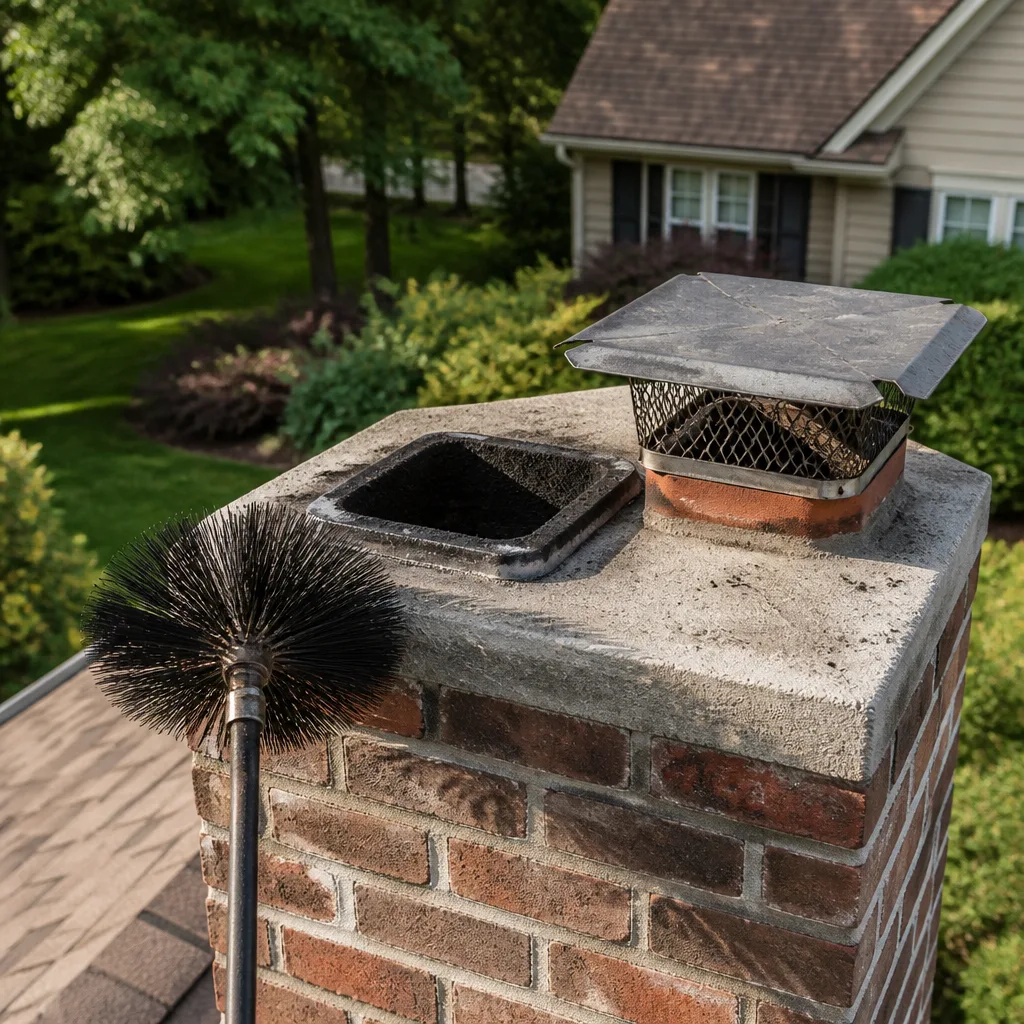 Sweep & inspection
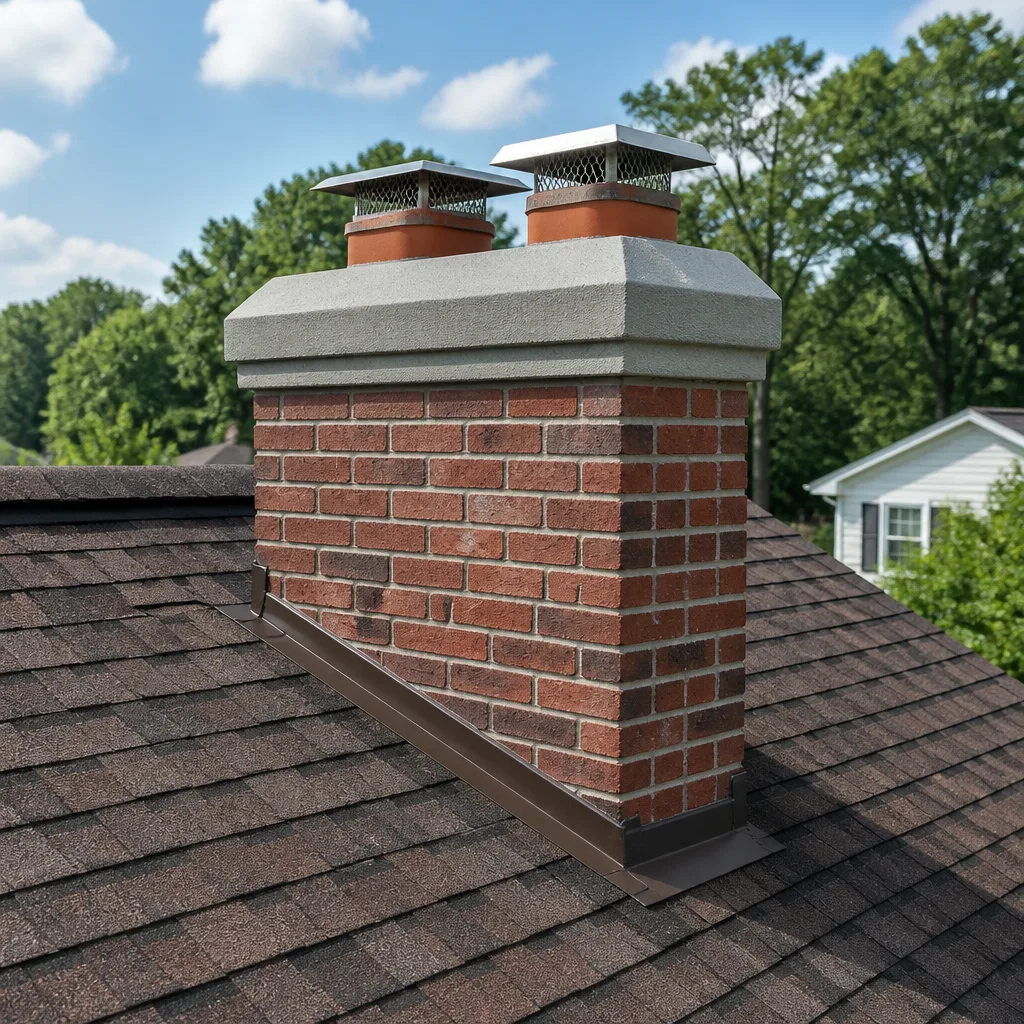 Caps & crowns
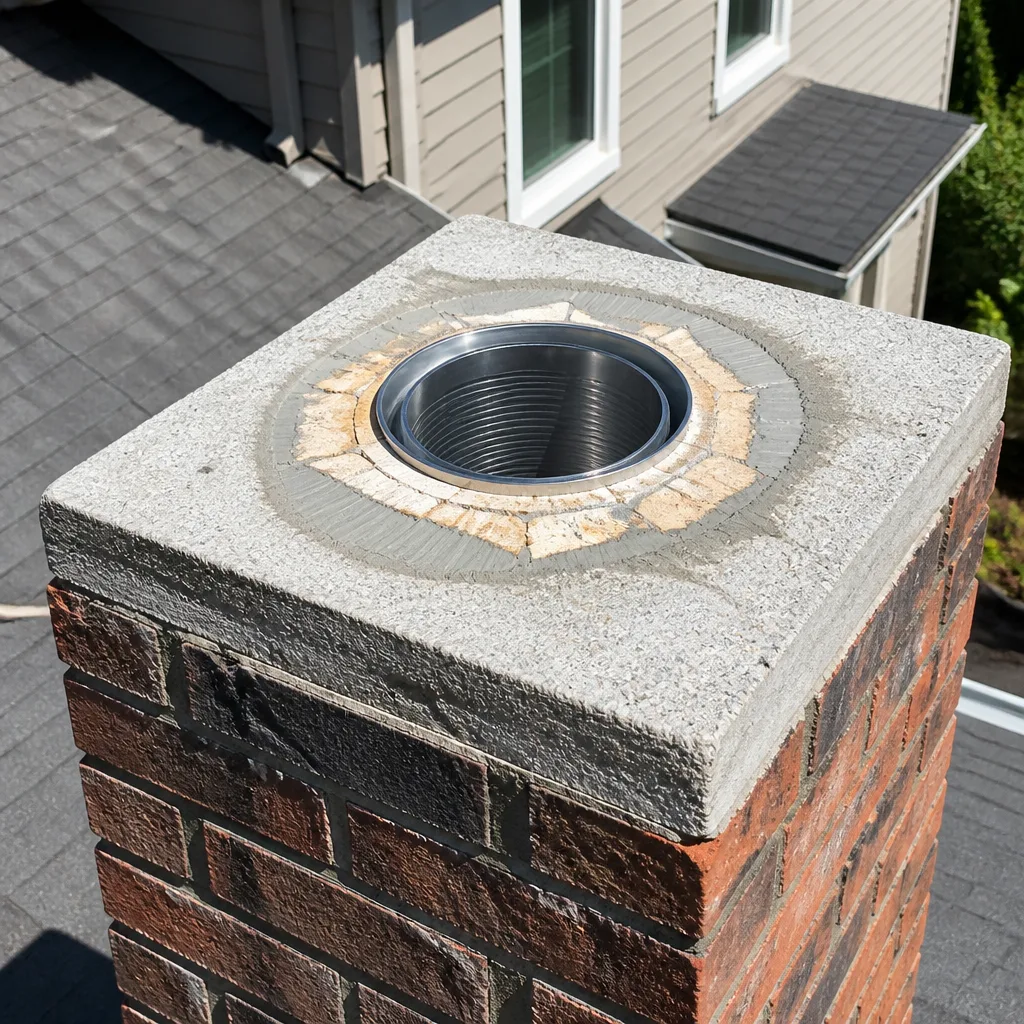 Flue relining
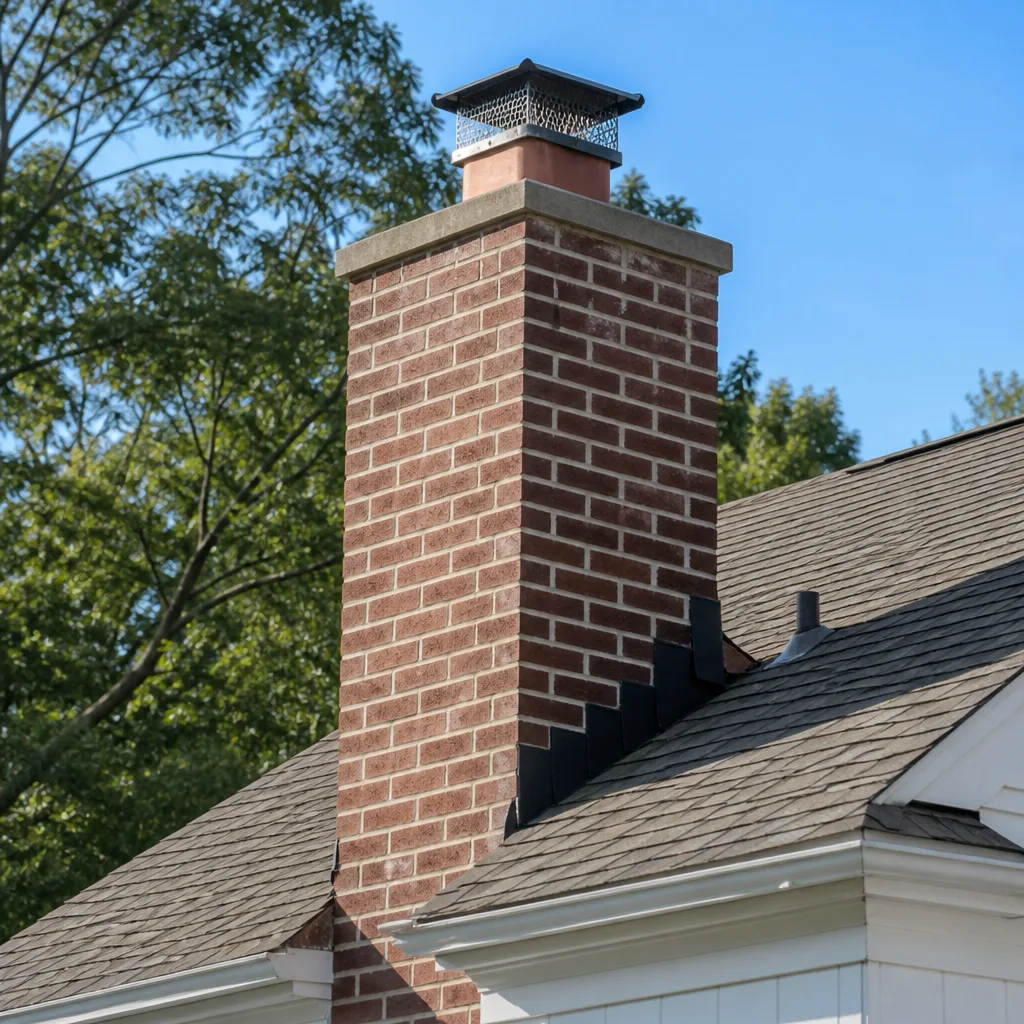 Masonry repair
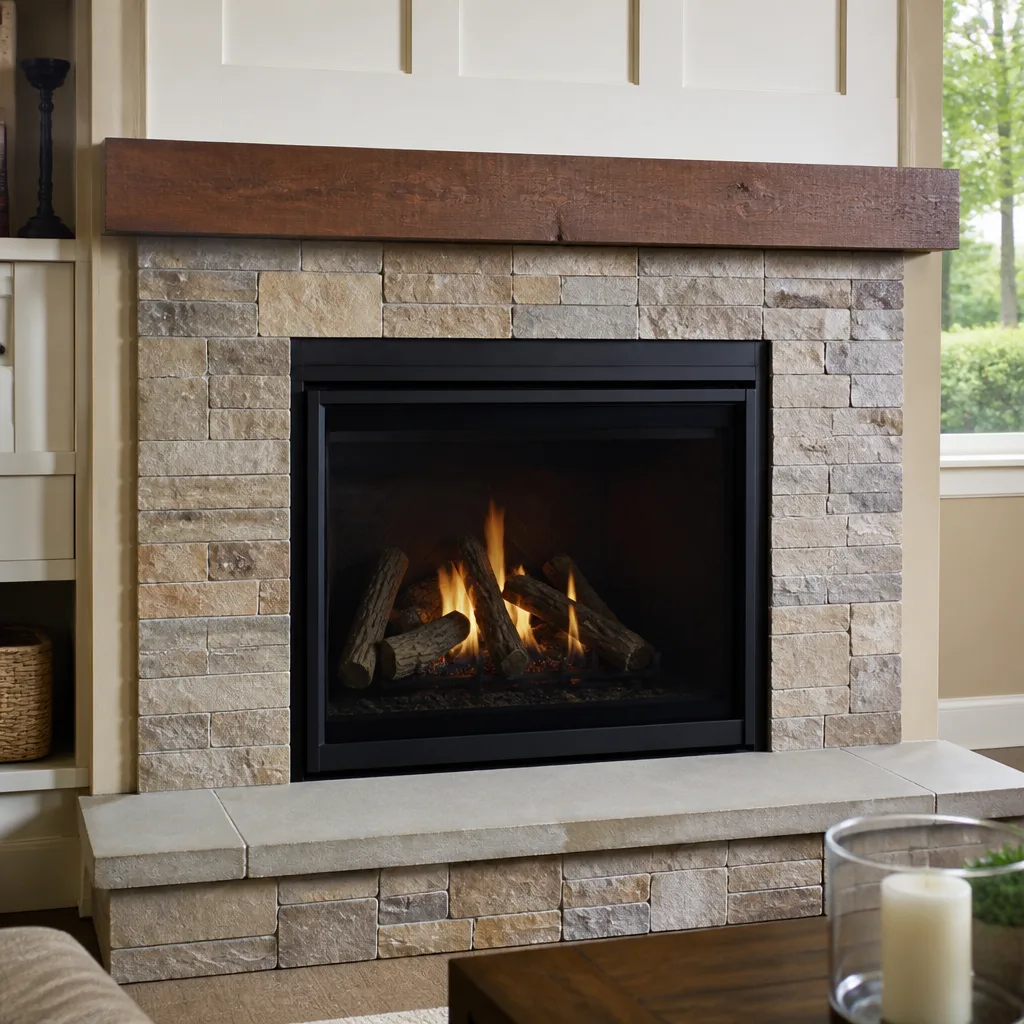 Gas fireplace service
Level 1 sweep and inspection to the NFPA 211 annual standard - flue, crown, cap, and flashing checked and photographed
Chimney sweep logs do not sweep chimneys. They loosen some creosote - which then falls where a brush and vacuum still have to collect it.
The Complete Guide to Chimney Cleaning in San Bernardino
Most chimney guides are written for the Northeast. They assume snow, sub-zero nights, and four months of continuous burning. San Bernardino homeowners are using the same fireplace advice written for Connecticut winters, and it’s causing them to under-clean in summer and over-trust their systems heading into Santa Ana wind season. This guide is different. We’re going to explain how San Bernardino’s inland desert climate creates a specific creosote and debris profile that standard chimney guides ignore, and we’ll point you to seasonal chimney cleaning care for San Bernardino for year-round maintenance timing. You’ll learn what actually determines your cleaning frequency, what a real inspection covers, and when you can safely wait versus when you need to act before burning season starts.
Styles & brands we work with
Quick Answer
Chimney cleaning in San Bernardino typically costs between $180 and $340 for a standard Level 1 sweep and inspection, and most homeowners with seasonal fireplace use need it once per year, ideally in late summer or early fall before the first burn. The dry inland climate doesn’t reduce creosote risk, it changes it, and Santa Ana winds compound the problem by forcing debris and fine ash into places humid climates never see. If you use your fireplace even one or two months per year, an annual sweep with a camera-backed inspection is the baseline for safe operation.
Table of Contents
- Why San Bernardino’s Climate Changes Everything About Chimney Cleaning
- The Three Types of Creosote (And Which One Southern California Homes Get)
- Why Wood Choice in San Bernardino Affects Creosote Differently
- Level 1, 2, and 3 Inspections: What San Bernardino Homeowners Actually Need
- What a Complete Cleaning Appointment Actually Covers
- The False Safety of Infrequent Winter Use
- Santa Ana Winds and Your Chimney: A Local Risk Most Guides Miss
- Common Mistakes to Avoid
- When to Call a Professional
- Frequently Asked Questions
- The Bottom Line
Why San Bernardino’s Climate Changes Everything About Chimney Cleaning
The single biggest factor in how often a chimney needs cleaning is not how much you burn. It’s what happens to the residue after the fire goes out. And in San Bernardino, what happens is different from almost anywhere else.
Here’s the core issue: creosote is not a stable substance. It forms when wood smoke condenses on the cooler walls of your flue, creating a sticky, tar-like deposit. In a humid climate, that creosote stays tacky and continues to accumulate. In San Bernardino’s dry air, which routinely sits below 20% relative humidity during fire season, the opposite happens. The creosote dries and hardens into a brittle, shiny glaze much faster than it would in a coastal or northeastern environment. That sounds better, but it’s not necessarily safer.
Hardened, glazed creosote is actually the most flammable form. It’s the type that produces the intense, fast-burning chimney fires that crack flue liners and spread to framing. The dryness doesn’t make the creosote less dangerous. It concentrates it. And because San Bernardino homeowners often go months between fires, that creosote has plenty of time to bake in the residual heat of the chimney and harden completely.
Then there’s the debris issue. The San Bernardino Valley sits in a natural wind corridor. Fine dust, ash, and airborne particles from the surrounding hills settle on roofs and find their way into chimneys that aren’t sealed tightly. We’ve swept chimneys in San Bernardino where a full third of the material removed was dust and windblown grit, not creosote. That grit mixes with creosote and creates an abrasive, caked-on layer that’s harder to remove than creosote alone. A chimney that would need a standard sweep in Vermont after a season may need more frequent attention here, even with less burning, simply because of what the wind deposits.
This is why local climate knowledge matters. A chimney sweep who understands San Bernardino’s specific conditions will clean and inspect differently than one who applies a generic national standard. The San Bernardino Chimney Sweep home page explains our approach, but the short version is this: we treat San Bernardino chimneys as a distinct category, not a copy of what works elsewhere.
The Three Types of Creosote (And Which One Southern California Homes Get)
The Chimney Safety Institute of America classifies creosote into three stages. Understanding which stage you have is the single most useful thing you can know about your chimney’s condition before calling anyone.
- Stage 1 (First Degree): Flaky, soot-like dust that brushes off easily. This is what a standard sweep with a wire brush removes quickly. In San Bernardino’s dry climate, Stage 1 creosote often doesn’t stay Stage 1 for long. The heat and dry air accelerate the transition to Stage 2.
- Stage 2 (Second Degree): Hard, crunchy, crystalline flakes. This is the most common stage we find in San Bernardino chimneys. It requires more aggressive mechanical removal, often with rotary loop tools or specialized scrapers. A standard brush alone won’t get it all.
- Stage 3 (Third Degree): A shiny, glazed, tar-like coating that’s essentially baked onto the flue walls. This is the dangerous stuff. It’s highly concentrated fuel, and it can’t be brushed off. It requires chemical treatment, rotary cleaning with heavy-duty chains or cables, or in severe cases, liner replacement or resurfacing.
Here’s what’s interesting about Stage 3 creosote in Southern California: it often appears in homes that burn infrequently. Homeowners assume low usage means low risk. But the dry heat means that even small amounts of creosote get repeatedly heated and hardened over weeks and months between fires. What starts as a thin layer becomes a dense glaze. If we see Stage 3 creosote in a San Bernardino home, the conversation often turns to repair options, not just cleaning. Products like HeatShield allow us to resurface a damaged liner without full replacement, which is a meaningful cost difference for homeowners who weren’t expecting a repair bill.
The takeaway is simple: don’t assume infrequent use means your creosote is easy to remove. San Bernardino’s conditions tend to push creosote toward the harder, more dangerous stages faster than humid-climate guides would lead you to believe.
Why Wood Choice in San Bernardino Affects Creosote Differently
Nationally, the standard advice is to burn seasoned hardwood: oak, maple, hickory. That advice holds up in San Bernardino, but the reality is different here. Many local homeowners burn what’s available, and what’s available is often eucalyptus, citrus wood from backyard groves, or scrap from local orchards.
Eucalyptus is a unique problem. It burns hot, which seems good, but it has a high oil content. Those oils vaporize in the fire and condense as creosote faster than oak or alder. Eucalyptus creosote tends to be stickier and darker, even in dry climates. It also produces more ash, which mixes with creosote and builds up faster. Citrus wood, on the other hand, can be seasoned properly and makes a decent firewood, but most homeowners don’t give it enough time. Unseasoned citrus smolders at lower temperatures, producing heavy smoke and thick creosote deposits quickly.
The local wood reality means that San Bernardino chimneys often accumulate creosote faster than the national average, even when burned for fewer months. If you’re burning eucalyptus from a tree that came down in the yard, or citrus scrap from a neighbor’s pruning, your chimney needs attention sooner than the standard “once per year” guideline suggests.
We recommend burning properly seasoned hardwood whenever possible. If you’re burning local eucalyptus or citrus, split and stack it for at least 12 months before use. Two years is better for eucalyptus. And if you can’t do that, plan on two cleanings per season rather than one. The cost of a second sweep is a fraction of the cost of a chimney fire response or a liner replacement.
Level 1, 2, and 3 Inspections: What San Bernardino Homeowners Actually Need
The CSIA defines three inspection levels. Here’s a straightforward breakdown of each, and which one applies to your situation in San Bernardino.
Level 1 Inspection
A Level 1 inspection is included with every standard chimney cleaning. The sweep examines the readily accessible parts of the chimney: the firebox, the visible flue interior, the cap, and the exterior top of the chimney from the roof or ladder. It confirms that the system is in basic working order and that no obvious blockages or damage exist. For most homeowners who use their fireplace seasonally and have had no changes to their system, a Level 1 inspection at the time of cleaning is sufficient. It’s what we perform during every sweep.
Level 2 Inspection
A Level 2 inspection goes further. It includes everything in Level 1 plus a video scan of the full flue interior using a camera. This is required by code in several situations: when a property is being sold or transferred, when the chimney has been damaged (earthquake, chimney fire, weather event), when you’re changing fuel types or appliances, or when you haven’t used the chimney for more than a year and are putting it back into service.
For San Bernardino homeowners specifically, we recommend a Level 2 inspection in two common scenarios. First, if you’ve lived in your home for more than a year and have never had the flue camera-scanned, get it done. You can’t see the liner walls from the top, and Stage 2 or Stage 3 creosote hides in places a visual inspection misses. Second, after any significant seismic event. The San Bernardino area sits near active fault lines, and even small earthquakes can shift masonry or crack clay tile liners. A camera inspection after a quake is cheap insurance against a chimney fire later.
If a Level 2 inspection reveals liner damage, our work doesn’t stop at the report. We handle Chimney Repair in Rubidoux and throughout San Bernardino, including liner resurfacing with HeatShield or full relining with DuraFlex flexible liner systems. That’s the difference between a company that finds problems and one that fixes them.
Level 3 Inspection
A Level 3 inspection is rare and invasive. It’s reserved for cases where a hazard is suspected but can’t be confirmed without removing building materials, like opening a wall or removing part of the chimney crown. If a Level 2 camera scan shows something concerning, or if there’s been a chimney fire with unknown damage extent, a Level 3 inspection may be necessary. Most San Bernardino homeowners will never need one, but it’s good to know the option exists and what it involves.
What a Complete Cleaning Appointment Actually Covers
A proper chimney cleaning is not just running a brush up the flue. Here’s what a complete appointment with a qualified sweep includes, step by step.
- Floor and surrounding area protection: Drop cloths and protective covering ensure the home isn’t covered in soot during the process.
- Firebox cleaning: The firebox, where the fire actually burns, is swept and vacuumed. Built-up ash and debris are removed down to the firebrick.
- Smoke chamber cleaning: This is the area above the firebox where smoke funnels into the flue. It’s also where a significant amount of creosote accumulates, and many low-cost sweeps skip it because it’s awkward to reach. Ask your sweep if they clean the smoke chamber. If they don’t, something’s wrong.
- Flue brushing: A wire brush sized to your specific flue diameter is run through the full length of the flue. For stubborn Stage 2 or Stage 3 creosote, rotary cleaning tools or specialized scrapers may be used.
- Damper inspection and cleaning: The damper is the metal plate that seals the chimney when not in use. It’s checked for warping, rust, and proper operation.
- Cap and crown inspection: The chimney cap keeps rain, birds, and debris out. The crown is the concrete or mortar surface at the top of the chimney. Both are checked for cracks, rust, or blockages. A cracked crown lets water into the masonry, which is a common and expensive problem in San Bernardino’s freeze-thaw cycles during winter mornings.
- Exterior visual check: The sweep examines the chimney exterior for spalling brick, deteriorating mortar, or other signs of structural weakness.
- Final vacuum and cleanup: The entire work area is vacuumed with a HEPA-filtered vacuum and left clean.
Beyond the chimney itself, we also recommend checking your dryer vent regularly. Dryer Vent Cleaning in Rubidoux is a core service we provide because dryer fires are one of the leading causes of residential fires in the United States, and most homeowners never think about it until there’s a problem. Your dryer vent is a fire risk too, and it should be cleaned annually, especially in a dry climate like San Bernardino’s where lint ignites easily.
The False Safety of Infrequent Winter Use
Here’s the most dangerous assumption we see in San Bernardino: “I only use my fireplace a couple months a year, so I don’t really need it cleaned that often.”
That assumption gets people into trouble for three reasons.
- Creosote doesn’t need volume to be dangerous. Even a thin layer of hardened creosote is a fire hazard. In San Bernardino’s dry heat, creosote hardens faster and burns hotter when it eventually ignites. A fireplace used only in December and January can still produce enough creosote to fuel a chimney fire in February.
- Animals and debris don’t care how often you burn. An unused chimney is an inviting home for birds, squirrels, and other wildlife. Nests block the flue and create a fire risk. We’ve pulled bird nests full of twigs and dried grass from San Bernardino chimneys that hadn’t been used in a year. The homeowner had no idea because they never looked.
- Inspection gaps mean slow problems get worse. Water damage from a cracked crown, a deteriorating mortar joint, a rusting damper: these problems develop whether you burn or not. They get noticed when someone finally looks. If you’re skipping annual cleanings because you don’t burn much, you’re also skipping annual inspections, and that’s when minor issues become major repairs.
If you burn one or two months per year, one annual cleaning with a Level 1 inspection is the right baseline. If you’re burning eucalyptus or unseasoned wood, plan for two. The cost of prevention is always cheaper than the cost of repair.
Santa Ana Winds and Your Chimney: A Local Risk Most Guides Miss
No national chimney guide mentions Santa Ana winds. That’s a significant oversight for San Bernardino homeowners.
Santa Ana season runs roughly from October through April, with the strongest winds typically in the fall. These are hot, dry, gusty winds that sweep down through the mountain passes and into the Inland Empire. For chimneys, they create three specific problems.
First, they force fine dust, ash, and windblown debris into chimneys that aren’t perfectly sealed. Even a properly fitted cap with a spark arrestor can’t keep out all fine particulate matter during a sustained Santa Ana event. That debris mixes with existing creosote and creates a layer that’s harder to remove and more likely to ignite.
Second, strong winds create a pressure differential that can push smoke back down the chimney even when your damper is open. This is called downdraft, and it’s more common in homes without proper chimney height or cap design. If you’ve ever had smoke rollout from your fireplace during a windstorm, that’s downdraft. It’s not only unpleasant, it deposits creosote and soot on the firebox and surrounding surfaces.
Third, prolonged dry winds desiccate masonry. Brick and mortar that’s exposed to months of hot, dry wind loses moisture faster than masonry in more humid climates. This accelerates spalling (brick surface flaking) and mortar deterioration. Hairline cracks turn into visible gaps over time. Water intrusion then becomes a problem when the occasional winter rain arrives, and the freeze-thaw cycle does further damage overnight.
The practical takeaway is this: inspect your chimney cap and crown after Santa Ana season. If you notice fine dust or grit in your firebox after a wind event, it’s probably also in your flue. And if you experience smoke rollout during high winds, get the chimney height and cap design evaluated. These are San Bernardino specific issues, and they’re exactly the kind of thing a local Chimney Sweep in Rubidoux will check that a generic national service might miss.
Common Mistakes to Avoid
- Waiting until winter to schedule a cleaning. San Bernardino sweeps book up fast in October and November. Schedule in late summer or early fall, before burning season starts and before Santa Ana winds arrive. You’ll get a better appointment time and address any issues before you need the fireplace.
- Assuming no burning means no cleaning needed. As covered above, creosote, debris, and animal nesting happen regardless of how often you burn. An unused chimney still needs an annual inspection.
- Burning unseasoned local wood. Eucalyptus and citrus need at least 12 months of seasoning, and eucalyptus benefits from 24. Burning green wood creates heavy smoke and thick creosote deposits fast.
- Hiring a generalist handyman for chimney work. Chimney systems are specialized. A handyman may be able to run a brush up a flue, but they won’t have the training to spot liner cracks, crown deterioration, or damper issues that a specialist will catch. And they can’t fix what they find. We use contractor grade materials from brands like Olympia Chimney and Famco for repairs, because the quality of the replacement parts matters as much as the quality of the work.
- Skipping the camera inspection. A Level 1 visual inspection cannot see everything. If you’ve never had a video scan of your flue, get one. It’s the only way to know for certain what condition your liner is in. Nothing is recommended without camera evidence you can see for yourself.
- Ignoring the dryer vent. Chimney and dryer vent cleaning are separate services, but they both deal with fire risk. A clogged dryer vent is one of the leading causes of house fires, and dry climates like San Bernardino’s make lint extra flammable. Clean it annually.
- Trusting a sweep who quotes without looking. Any sweep who gives you a firm price over the phone without seeing the chimney is guessing. A proper quote comes after an inspection. If someone quotes you $99 without visiting, the actual bill will be higher once they’re on site.
When to Call a Professional
Some homeowners are comfortable doing basic home maintenance themselves. Chimney cleaning is not one of those tasks. If you’re weighing DIY vs professional chimney cleaning in San Bernardino, here’s when you need a professional.
If you haven’t had your chimney inspected in the past 12 months, schedule a cleaning and Level 1 inspection now. If you’ve had a chimney fire, even a small one, stop using the fireplace immediately and call for a Level 2 camera inspection. The same applies if you’ve experienced significant earthquakes, if you’re buying or selling a home, or if you’ve noticed water stains on the ceiling near the chimney. If you smell a smoky odor in the house when the fireplace is not in use, that’s a sign of a blocked or damaged flue and needs attention. And if you can’t remember the last time your dryer vent was cleaned, it’s probably overdue.
San Bernardino Chimney Sweep offers free estimates in San Bernardino, call (877) 516-7159 to schedule. We find it and we fix it, so you don’t need to call a second company when an inspection reveals liner or masonry damage.
Frequently Asked Questions
A standard chimney cleaning with a Level 1 inspection in San Bernardino typically runs between $180 and $340, depending on the chimney condition, height, accessibility, and whether additional services like a camera inspection are included. Call (877) 516-7159 for an exact quote after we inspect your specific system, estimates are free.
Annually is the baseline, even if you only use your fireplace one or two months per year. If you burn eucalyptus, unseasoned wood, or use the fireplace heavily, plan for two cleanings per burning season. San Bernardino’s dry climate hardens creosote faster, and Santa Ana winds add debris, so annual is a minimum, not a maximum.
Not always. Many liner issues can be addressed with resurfacing rather than full replacement. We use HeatShield, a product-backed repair method that extends liner life without the cost and disruption of full relining. We’ll show you the camera footage and explain your options plainly. If the liner is safe to continue using, we’ll say so. We recommend repair only when it’s genuinely needed.
Creosote accumulates and hardens, debris builds up, and the risk of a chimney fire increases. A chimney fire can crack your flue liner, damage the masonry, and in serious cases spread to the home’s framing. There’s also the carbon monoxide risk: a partially blocked flue prevents proper venting, and CO is odorless and invisible. The $200 to $300 cost of cleaning is the cheapest insurance you’ll ever buy against a $10,000 repair or worse.
No, they’re separate services, but both address fire risk. A chimney sweep cleans and inspects the fireplace and flue system. A dryer vent cleaning removes built-up lint from the dryer exhaust duct, which is one of the leading causes of house fires in the U.S. We handle both, and San Bernardino’s dry climate makes both annual services worth scheduling. Call (877) 516-7159 to book either.
You can buy chimney brushes at hardware stores, but we don’t recommend DIY cleaning. A proper cleaning requires understanding creosote stages, access equipment, and what to look for in the firebox, smoke chamber, and crown. For help finding qualified help, see our guide on how to hire a chimney cleaning contractor in San Bernardino. More importantly, a DIY cleaning is not an inspection. You’ll remove some soot but miss the cracked liner or deteriorating crown that a trained sweep will catch. The inspection is the more valuable half of the service.
The Bottom Line
San Bernardino’s dry heat and Santa Ana winds create a chimney environment that generic national guides don’t address. Creosote hardens faster, local wood choices accelerate buildup, and windblown debris adds material that humid climates never see. Annual cleaning with a proper inspection is the baseline, and it’s not negotiable if you use your fireplace at all. For more guides & resources on keeping your system safe, visit our blog. The inspection is as important as the cleaning itself: it’s how you catch liner cracks, crown damage, and blockages before they become dangerous. And if something is wrong, hiring a company that can both find the problem and fix it saves you time, money, and the hassle of hiring a second contractor. San Bernardino Chimney Sweep handles cleaning, repair, and dryer vents, using contractor grade materials like HeatShield, DuraFlex, and Olympia Chimney rather than whatever is cheapest on the shelf. Built to last another season.
Written by the team at San Bernardino Chimney Sweep, serving San Bernardino since 2018.
See the difference
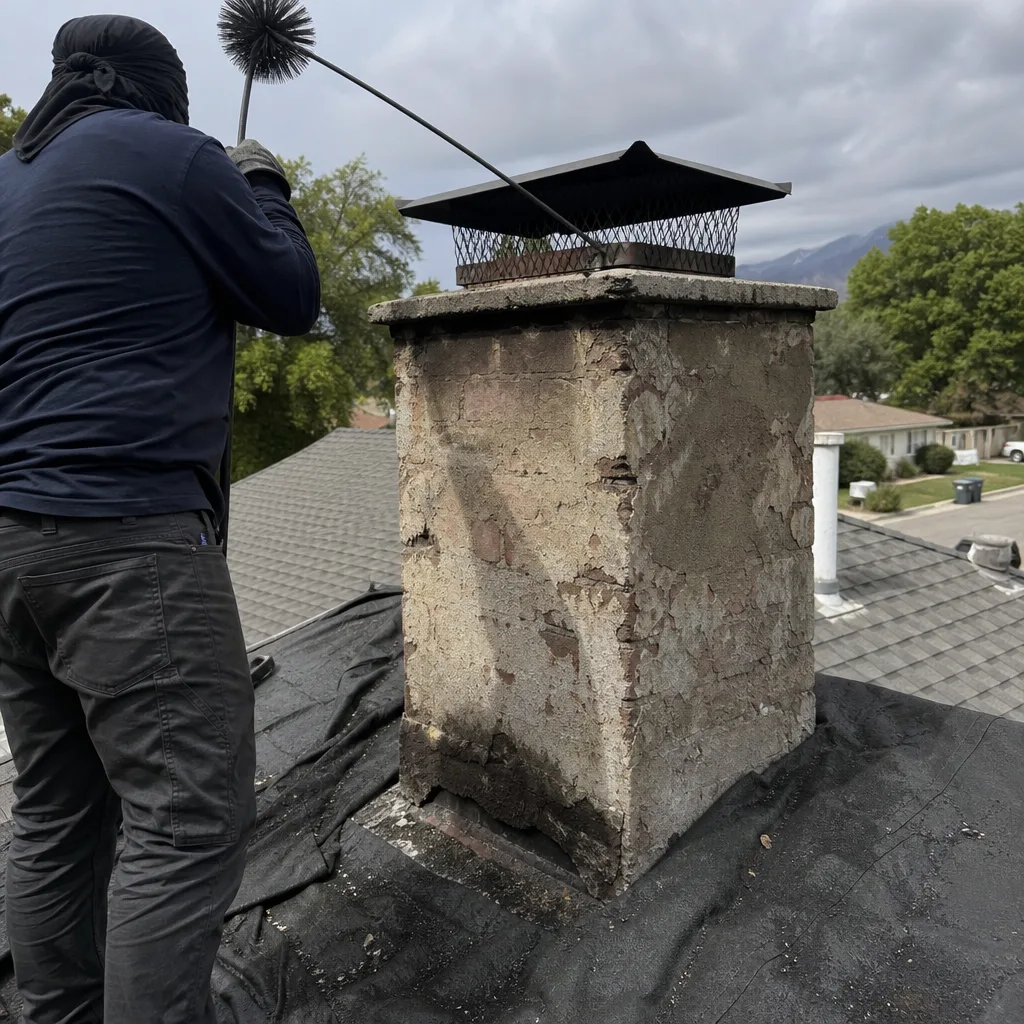 Before
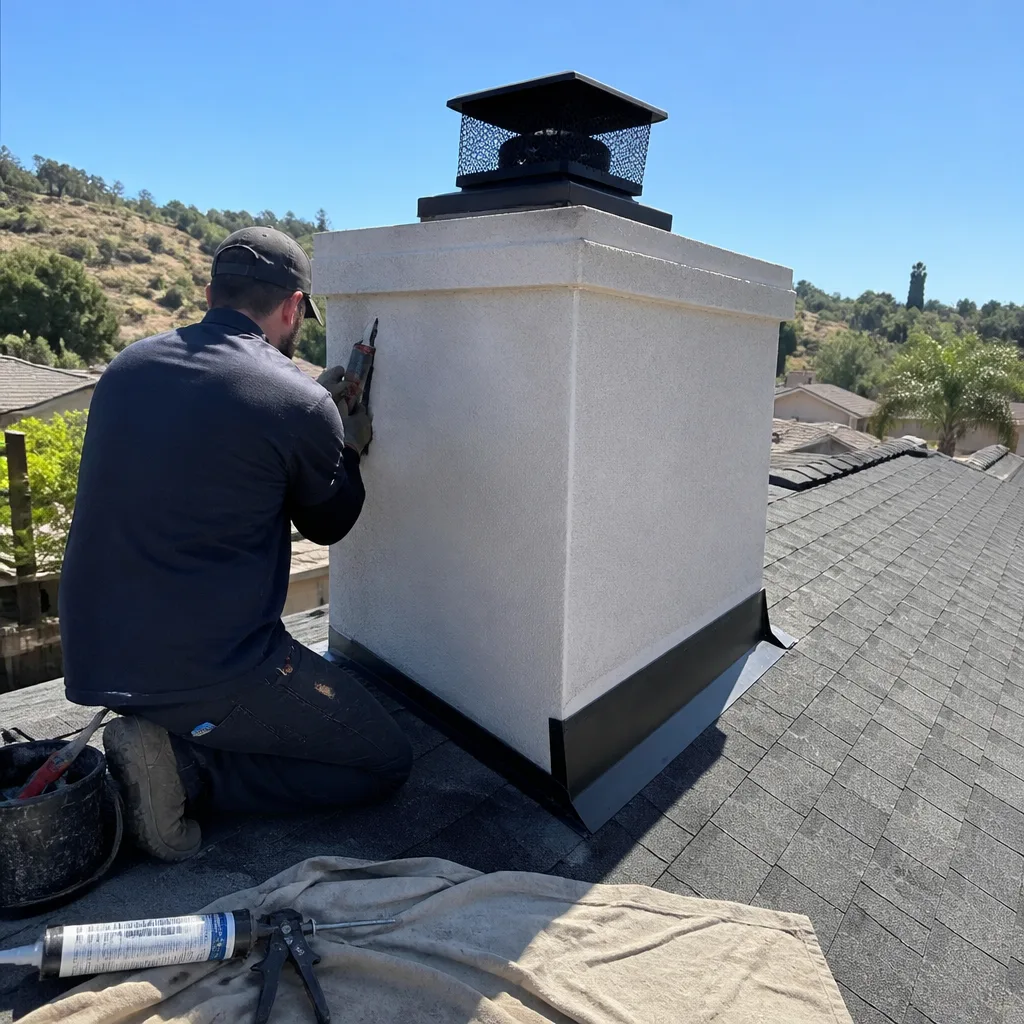 After
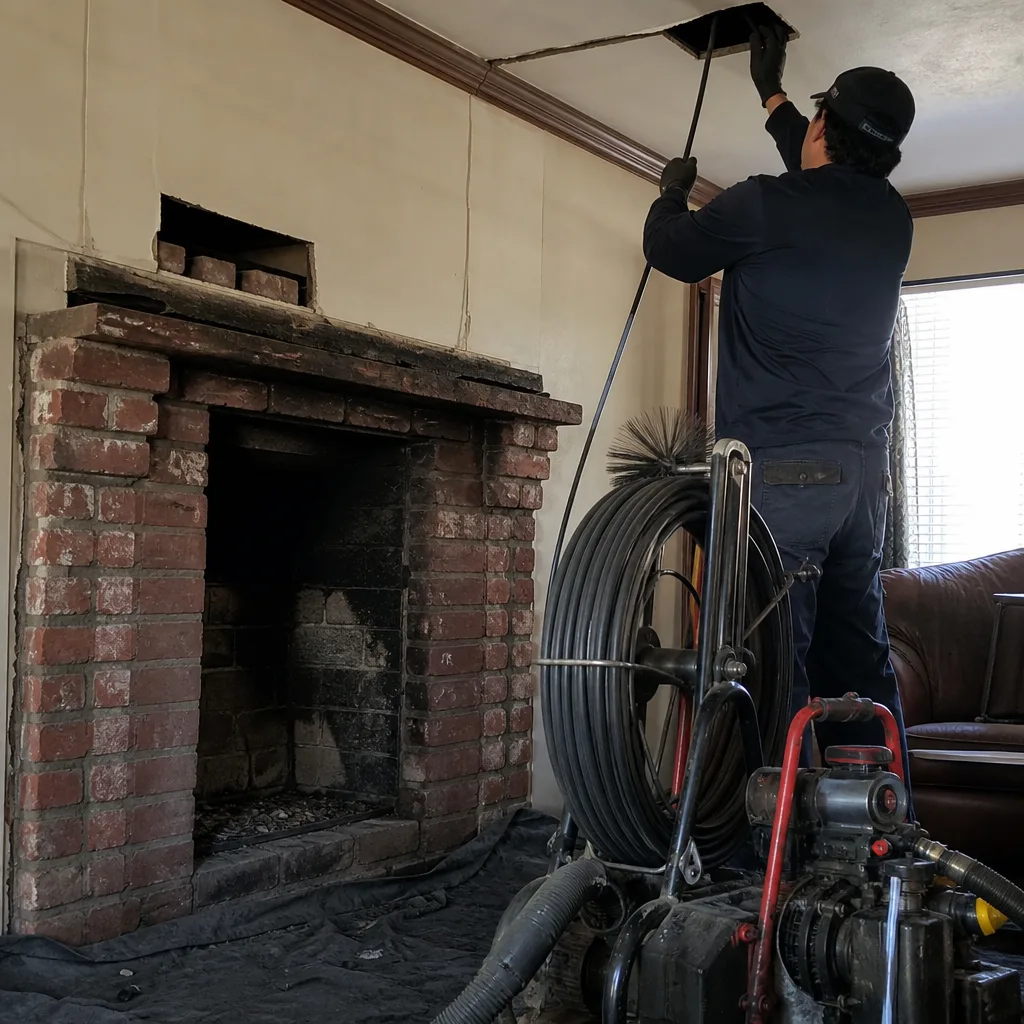 Before
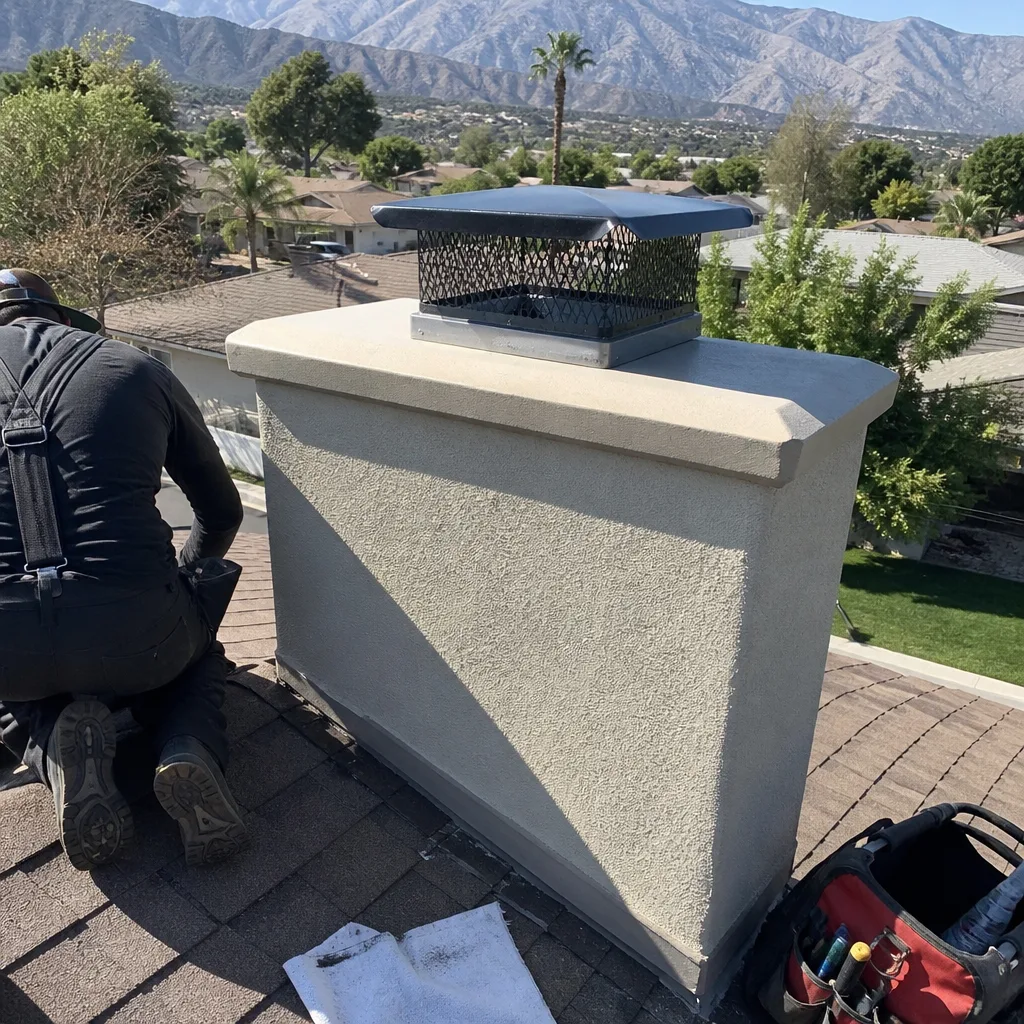 After
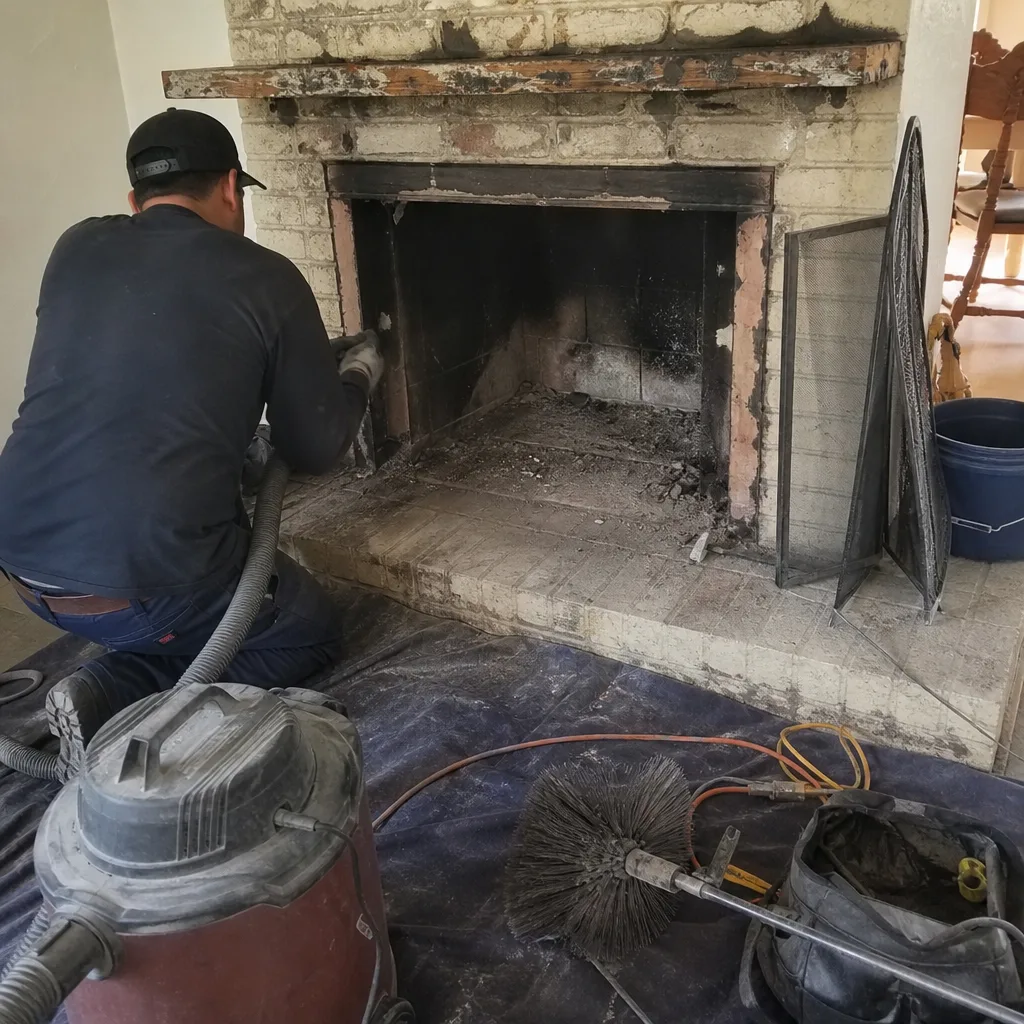 Before
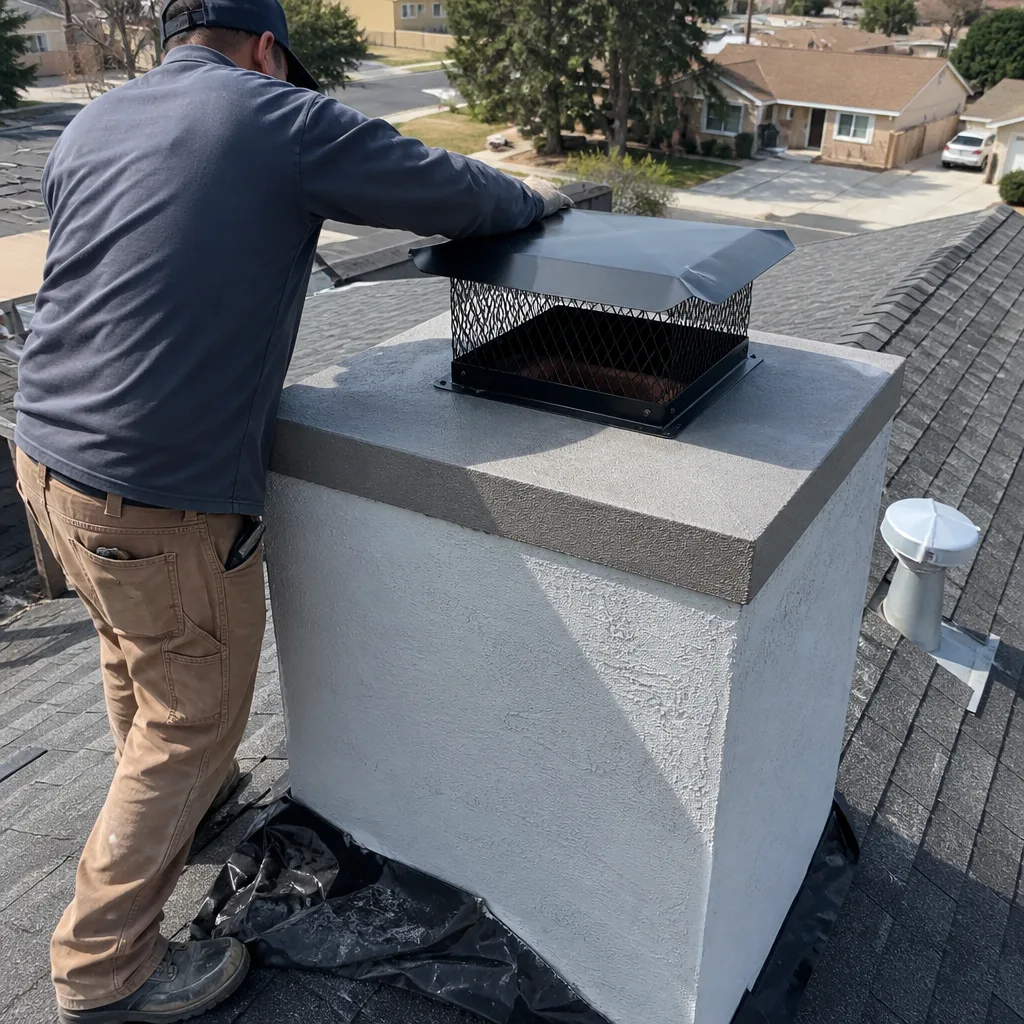 After