Last updated October 30, 2026
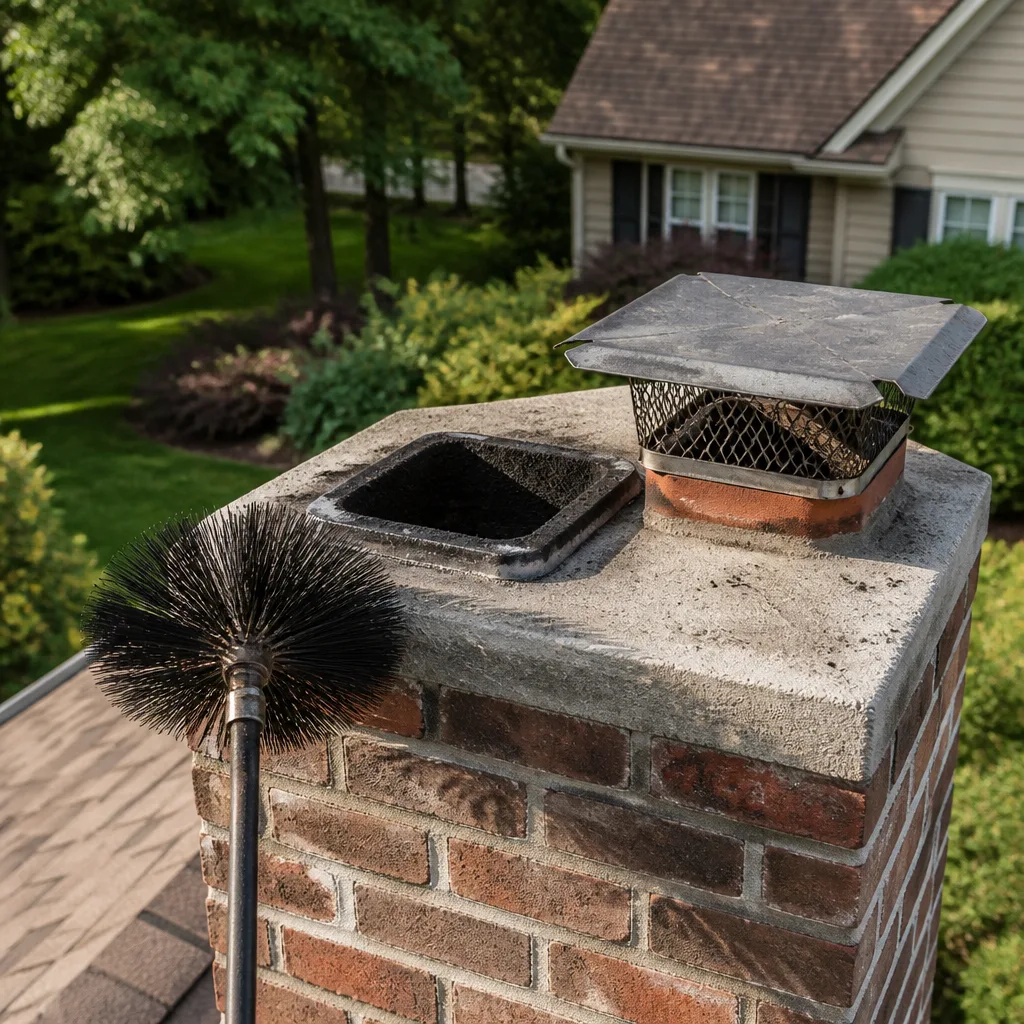 Sweep & inspection
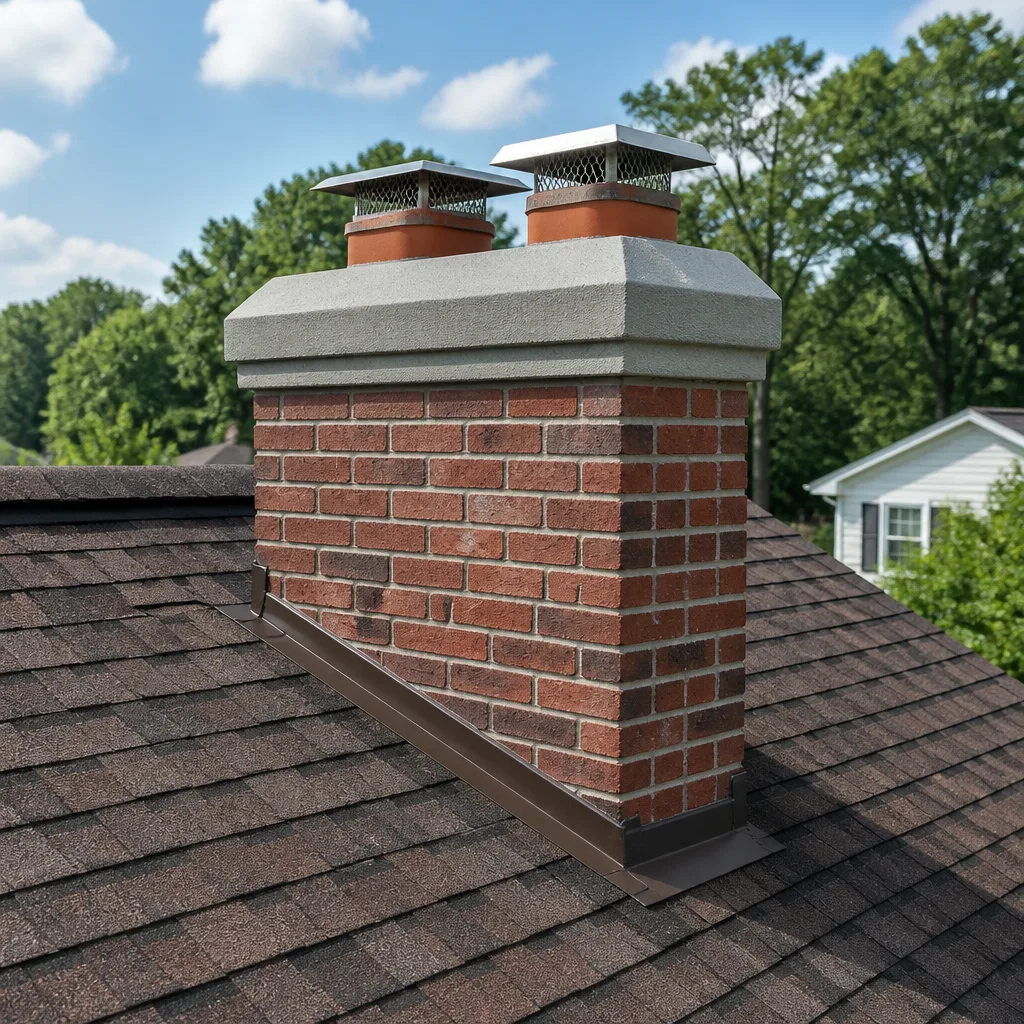 Caps & crowns
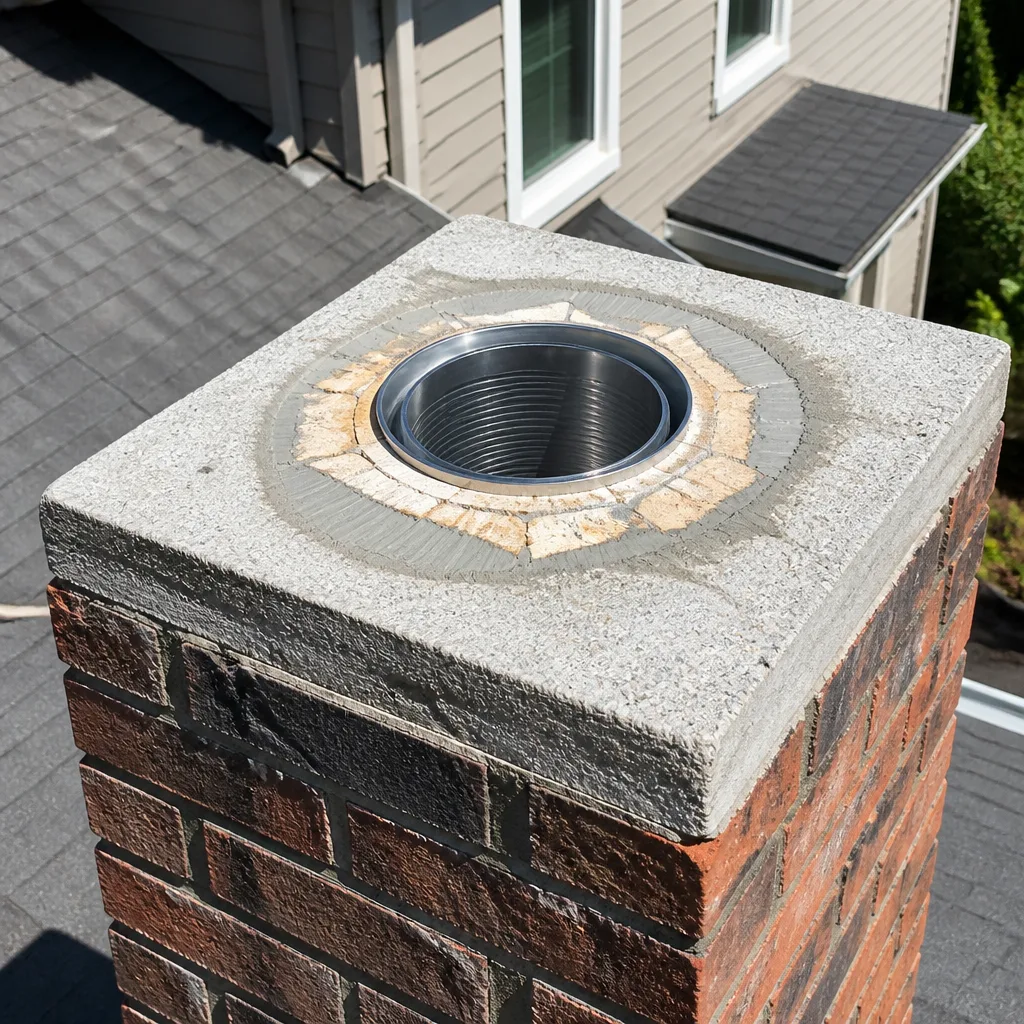 Flue relining
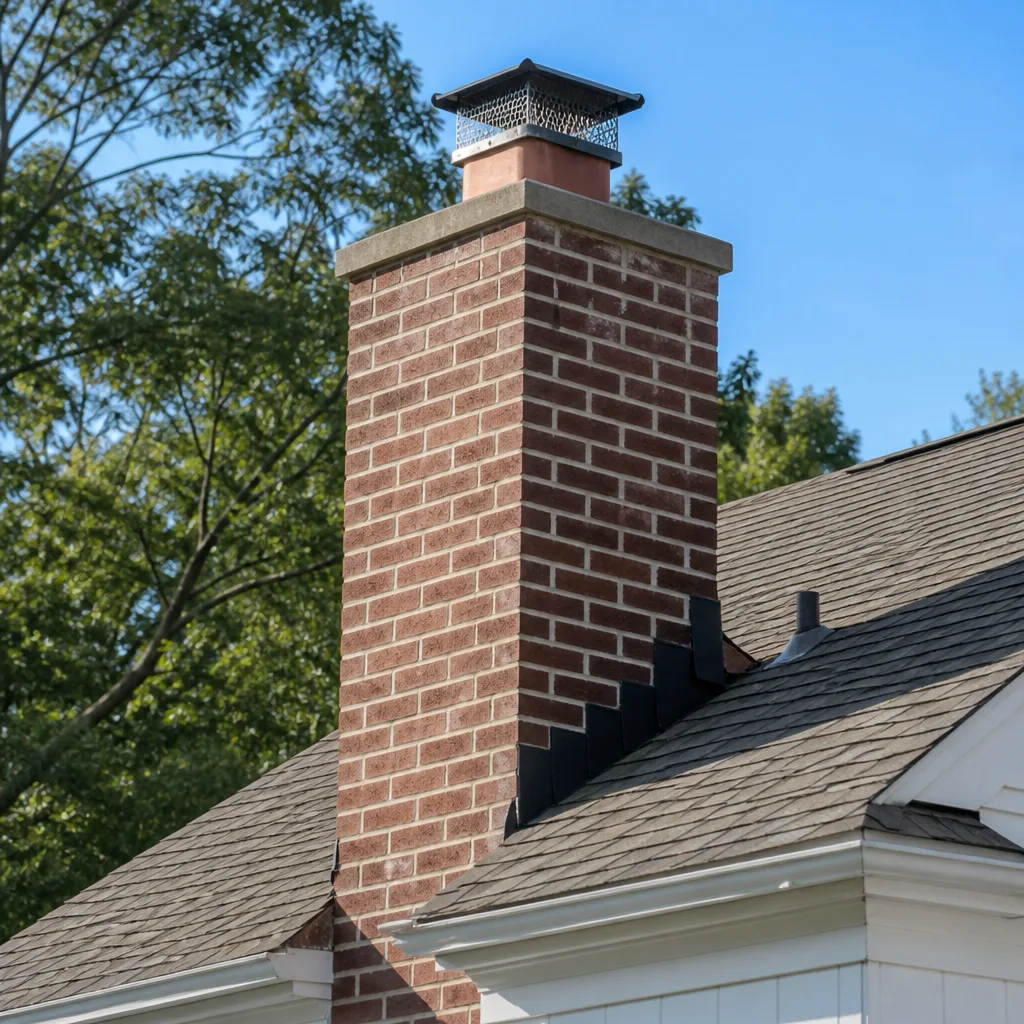 Masonry repair
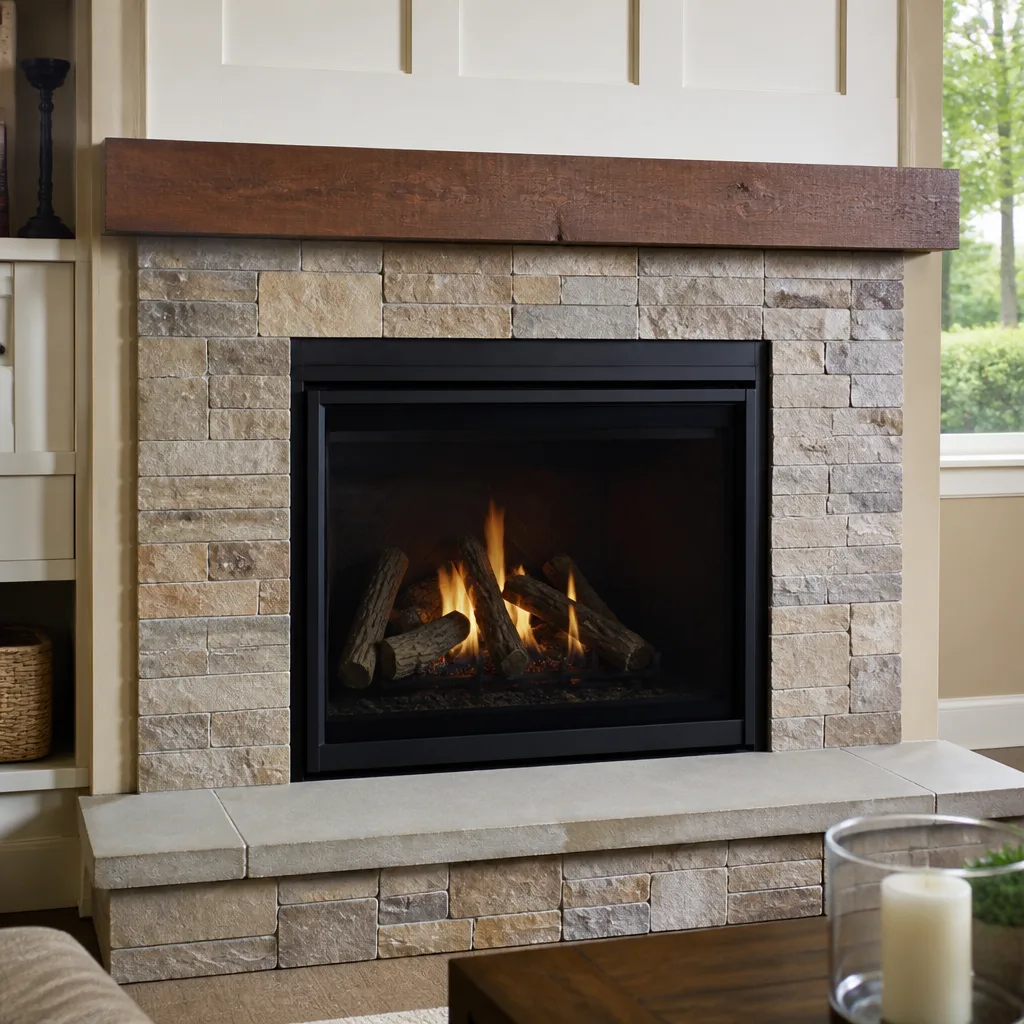 Gas fireplace service
Level 1 sweep and inspection to the NFPA 211 annual standard - flue, crown, cap, and flashing checked and photographed
Chimney sweep logs do not sweep chimneys. They loosen some creosote - which then falls where a brush and vacuum still have to collect it.
Choosing the Right Chimney Cleaning Brand: A Buyer’s Guide for San Bernardino
When a chimney contractor repairs your liner or seals your crown, the product they use sits inside your home’s exhaust system for a decade or more. Most homeowners will never see it, touch it, or think about it again after installation. That invisibility is exactly why brand selection matters more than most people realize. “We use quality materials” is not an answer. Knowing what HeatShield, Gelco, and Olympia Chimney actually produce is the difference between a specification and a sales line. San Bernardino homeowners who burn wood seasonally in mountain-adjacent and valley neighborhoods alike face wind, heat, and creosote conditions that expose cheap materials quickly. This guide explains what the leading chimney material brands actually do differently, so you can have an informed conversation with any sweep who shows up at your door. For The Complete Chimney Sweep Guide for San Bernardino Homeowners, see our companion resource.
Quick Answer
The right chimney cleaning brand is not a company name. It is the material and product lineup that company uses inside your chimney. For San Bernardino homeowners, the smart approach is to hire a specialist who specifies contractor-grade products like HeatShield for flue resurfacing and Gelco or Olympia Chimney caps for crown protection, then asks for those brands by name on a written estimate. Our Complete Guide to Chimney Cleaning in San Bernardino covers how to evaluate that specialist. A company that will name its materials in writing is a company that stands behind its work.
Styles & brands we work with
Table of Contents
- Why the Brand Inside Your Chimney Matters More Than the Logo on the Truck
- What HeatShield Actually Is and Why It Beats Generic Mortar
- Chimney Caps and Crowns: Gelco, Olympia Chimney, and the San Bernardino Wind Test
- CSIA and NFI Certifications: What They Signal and What They Do Not
- How to Ask for Materials by Brand Name on a Written Estimate
- Four Questions to Ask Any Chimney Contractor Before Booking
- The Dryer Vent Parallel: Why Material Choice Matters There Too
- San Bernardino-Specific Factors That Affect Chimney Material Choice
Why the Brand Inside Your Chimney Matters More Than the Logo on the Truck
Any contractor can put a name on a van. Fewer can tell you what is inside the flue they just repaired. In our experience cleaning and repairing chimneys in San Bernardino, we regularly open dampers and find patch jobs that used big-box store mortar or generic cap assemblies that were never designed for the heat cycling a wood-burning fireplace produces.
Here is the distinction that gets missed. Chimney materials live in an environment that oscillates between 70-degree ambient air and 1,000-plus-degree exhaust temperatures, season after season. Cheap materials fail in predictable ways. Generic mortar cracks and falls out of flue tile joints. Thin gauge caps rust through at the weld points. Flexible liners without proper alloy composition kink or tear during installation. When those materials fail, the repair cost is higher than the original job would have been.
Contractor-grade brands exist because building supply standards recognize this. HeatShield, Gelco, Olympia Chimney, and Famco each manufacture specific products engineered for specific chimney failure modes. A sweep who uses them is signaling something important: they have supplier relationships with professional chimney supply houses, and they are willing to pay more for materials they know will hold up. Cut-rate operators rarely carry these lines because they cost more upfront, even though they cost less over time.
When you hire a specialist, you are paying for that material judgment. The San Bernardino Chimney Sweep home page explains how this material-first approach connects to the full scope of chimney work we do. The point here is simpler: ask what is going inside your flue before you sign anything.
What HeatShield Actually Is and Why It Beats Generic Mortar
HeatShield is a cerfractory flue sealant, and that word matters. Cerfractory material combines ceramic and refractory properties in a single compound. It is designed to bond to the inside of a flue, expand and contract with the tile as it heats and cools, and remain gas-tight through thousands of thermal cycles. Generic fireplace mortar is not designed to do any of those three things in a flue environment.
Here is the functional difference for a San Bernardino homeowner. When flue tile joints crack or spall, combustion gases can escape through those gaps into the chase cavity or the home. Generic mortar injected into those gaps will hold for a few seasons and then crack again because it cannot flex. HeatShield is applied as a product-backed resurfacing system, and its material chemistry is built around that flex-and-seal requirement.
The practical application looks like this:
- A camera inspection identifies cracked flue tiles or missing mortar joints.
- The flue is cleaned to bare surface so the sealant can bond.
- A specialized applicator is run up the flue, coating the interior with HeatShield sealant in a continuous pass.
- The coating cures to a smooth, gas-tight surface that restores liner integrity.
That fourth step is the key point. HeatShield is not a patch. It is a resurfacing method that extends liner life without full replacement. Full liner replacement in San Bernardino homes typically means demolition work around the firebox or removing the old tile flue entirely, which is more disruptive and more expensive. HeatShield gives homeowners an option that buys years of safe operation for a fraction of the cost and none of the demolition.
We will note one honest limitation. HeatShield is not a substitute for a liner that has already collapsed or separated completely. In those cases, a flexible liner system from a brand like DuraFlex is the right call for relining the full flue. The point is that the material decision should follow the camera inspection, not precede it. A contractor who recommends a material before seeing the flue interior is guessing.
Chimney Caps and Crowns: Gelco, Olympia Chimney, and the San Bernardino Wind Test
San Bernardino sits in a wind corridor that runs between the San Bernardino Mountains and the Cajon Pass. Homes in the north end of the city, along the foothills, get genuine Santa Ana event gusts. That matters for chimney components exposed to weather: caps, crowns, and chase covers.
A chimney cap is the metal assembly that sits on top of the flue tile. It keeps rain out, blocks animal entry, and contains sparks. The hardware store version is typically stamped from light gauge sheet metal with welded seams. After two or three seasons of wind buffeting and heat expansion, those seams start to split. The cap becomes a rattle trap or, worse, a spark source when weld points fail.
Gelco and Olympia Chimney manufacture caps from heavier-gauge materials with rolled edges and mechanically fastened components that hold up to repeated wind loading. Famco makes dampers and venting components with similar attention to material thickness. When we install a cap on a chimney in San Bernardino, we want a unit that will stay put through a December cold snap followed by a January wind event and a February heat cycle. Cheap caps do not.
The crown is a separate piece. It is the concrete or mortar slab that covers the top of the chimney chase. Crowns crack over time because concrete is porous and expands with water absorption. The repair approach matters: a thin skim coat of mortar fails within seasons. A proper crown repair uses a flexible sealant designed for the movement, and the products a contractor chooses for that job say a lot about how long the fix will last.
Ask any chimney contractor this: “What gauge is the cap you are quoting, and what brand?” If they cannot answer, that is an answer. Our Chimney Repair in Rubidoux page goes deeper on how material selection shapes repair outcomes across the broader Inland Empire.
CSIA and NFI Certifications: What They Signal and What They Do Not
The Chimney Safety Institute of America (CSIA) and the National Fireplace Institute (NFI) are the two major credentialing bodies for chimney and hearth professionals in the United States. A technician who holds a CSIA Certified Chimney Sweep credential has passed a written exam covering codes, clearances, inspection procedures, and installation standards. An NFI certification does the same for fireplace and venting systems specifically.
That training is valuable. It means the technician knows what a properly functioning flue should look like and knows how to run a camera inspection correctly. What it does not tell you is what materials that technician will use on your repair. CSIA and NFI test knowledge of systems and standards. They do not mandate specific brands. A fully certified technician can still choose to install a thin-gauge cap or patch a flue with generic sealant.
Material brand selection is a separate consideration from technician training. Ideally, you want both: a trained technician who chooses better materials. The certification tells you they know the code. The material spec tells you what they think about longevity.
In practical terms, here is how to use certification in your vetting process:
- Ask if the technician performing the work holds CSIA or NFI credentials.
- Ask what materials they use for liner repair, crown sealing, and cap installation.
- Ask for both to be stated on the written estimate.
A contractor who answers all three clearly is giving you a full picture. One who answers the first but not the second or third is hiding something about their material costs or their supply relationships.
How to Ask for Materials by Brand Name on a Written Estimate
The written estimate is where the conversation gets real. Most contractors will verbally agree that they “use good materials.” Far fewer will put the brand names in writing. That distinction is the difference between a specification and a sales line, and it is the single best way to separate a specialist from a generalist in the San Bernardino chimney market.
Here is the step-by-step approach that works in our experience:
- During the inspection, ask what the camera showed. A real sweep will show you the footage and point to the specific issue. If someone recommends a liner repair without showing you the flue interior, stop the conversation.
- Ask what specific product they would use for the repair. Listen for brand names. HeatShield for flue sealing. Gelco or Olympia Chimney for caps. DuraFlex for relining. If they answer “good quality stuff” or “industrial grade,” push for specificity.
- Ask them to write the brand names on the estimate. This is the test. A contractor who believes in their materials will list them. One who refuses is protecting the ability to substitute cheaper products after you commit.
- Compare material lines, not just prices. Two quotes that are $300 apart may differ by more than that in long-term durability. The estimate that spells out HeatShield and a Gelco cap is worth more than the one that says “cap: standard.”
We have seen this play out many times. The homeowner who asks for a written material spec ends up with a better result because the act of asking changes the contractor’s behavior. When materials are documented, substitutions become harder to justify. Reluctance to specify by brand on a written estimate is a red flag, plain as that.
Four Questions to Ask Any Chimney Contractor Before Booking
Here is the practical reference list for San Bernardino and Inland Empire homeowners. These four questions cut through the noise:
- “What brand of flue sealant or resurfacing product do you use for liner repairs?” The answer should be a product name like HeatShield, not a category like “refractory mortar.” This question reveals whether the contractor has access to professional supply lines.
- “Can you put the material brands on the written estimate?” A straight yes is a good sign. Any hedging means you should keep looking.
- “What brand of cap will you install, and what gauge is the material?” Gelco and Olympia Chimney are common professional lines. If the answer is “whatever fits,” that is a problem.
- “If the inspection finds damage, can you fix it in the same visit or will I need a second company?” This gets at the specialist-versus-generalist split. A company that sweeps and repairs under one roof saves you time and double service fees. We find it and we fix it, which is the whole reason our Chimney Sweep in Rubidoux service is built around full inspection rather than fast surface cleaning.
These questions work because they are specific. Vague contractors deflect. Specialists answer.
The Dryer Vent Parallel: Why Material Choice Matters There Too
Most homeowners think of chimney fires as the hot weather or cold weather hazard. The data tells a different story for laundry rooms. Clothes dryer fires account for thousands of residential fires every year in the United States, and the leading cause is lint accumulation in the vent run. The material that vent run is made of matters as much as the cleaning schedule.
Older homes in San Bernardino, particularly in the pre-1980s housing stock near downtown and along Baseline, often have dryer vents made from flexible white vinyl or foil. Those materials are no longer allowed in new construction or replacement installations because they trap lint aggressively and can melt or burn if the duct reaches ignition temperatures. The correct material for a dryer vent run is rigid metal duct or UL-listed semi-rigid aluminum.
This is the same material-quality logic applied to a different exhaust system. The contractor who cleans your chimney and the contractor who cleans your dryer vent should both be able to tell you what your vent system is made of and whether it needs replacement. Our Dryer Vent Cleaning in Rubidoux service includes exactly that kind of material assessment because a clean vent made of dangerous material is still a dangerous vent.
The takeaway for this guide: material brand and material type are the same conversation in two different exhaust systems. Ask about both.
San Bernardino-Specific Factors That Affect Chimney Material Choice
San Bernardino is not a generic suburban market. Three local factors push material choice in specific directions, and they are worth naming plainly.
Wind loading. The Santa Ana and gap wind events that funnel through the Cajon Pass subject chimney caps and crowns to repeated lateral stress. Cheap welded caps fail at the seams. Heavier gauge caps with rolled construction hold up. If you live in the northern foothills or anywhere with western exposure to the pass, this is your problem more than most.
Heat and drought cycling. San Bernardino summers push 100 degrees regularly, and the valley air stays dry. Crowns crack from thermal expansion and contraction even when the fireplace is unused. The crown material and the sealant used on it need to flex or they fail. That drives the choice toward flexible crown sealants rather than basic mortar skim coats.
Seasonal use patterns. Most San Bernardino homeowners use their fireplaces from November through February, then leave the system dormant for eight months. Creosote builds up during the burn season and sits there through spring and summer, hardening into a glaze that is more difficult to remove in the fall. This is why we recommend a spring sweep after the burn season, not just a pre-season sweep. Material choice matters here too: hardened creosote requires more aggressive cleaning methods, and a flue with cracked tile joints cannot handle repeated aggressive brushing without further damage.
All three factors point the same direction: use materials engineered for the actual conditions, and use a contractor who knows the local climate. A chimney service that treats San Bernardino like any other market is already missing the point.
Common Mistakes to Avoid
- Accepting “quality materials” as an answer without a brand name. Any contractor can say they use good stuff. Fewer will write HeatShield or Gelco on a contract. Demand the written spec.
- Choosing a general handyman because the price is lower. A handyman cannot legally or safely open a chimney inspection camera, diagnose flue damage, or apply a product-backed resurfacing system. You will pay twice: once for the handyman, once for the specialist who fixes the result.
- Waiting until October to book a sweep. San Bernardino chimney companies book solid during the pre-season rush. Schedule in late summer or early fall when you can get a slower, more thorough inspection.
- Ignoring the dryer vent entirely. Your chimney is not the only exhaust system in your home. The dryer vent carries lint, and lint burns. Get it cleaned as part of the same service visit if your contractor offers it.
- Skipping the camera inspection. A sweep without a camera is a surface cleaning. The camera is how you see cracked tiles, separated joints, and early-stage liner damage before they become a fire hazard.
- Patching a crown with cheap mortar instead of flexible sealant. A skim coat of hardware store mortar will crack within two seasons in San Bernardino’s heat and wind cycling. Use the right sealant the first time.
- Not asking whether the repair can be done in the same visit as the cleaning. If the contractor only cleans and cannot fix what they find, you are booking two companies and paying two service fees. A specialist who sweeps and repairs saves you that double trip.
See the difference
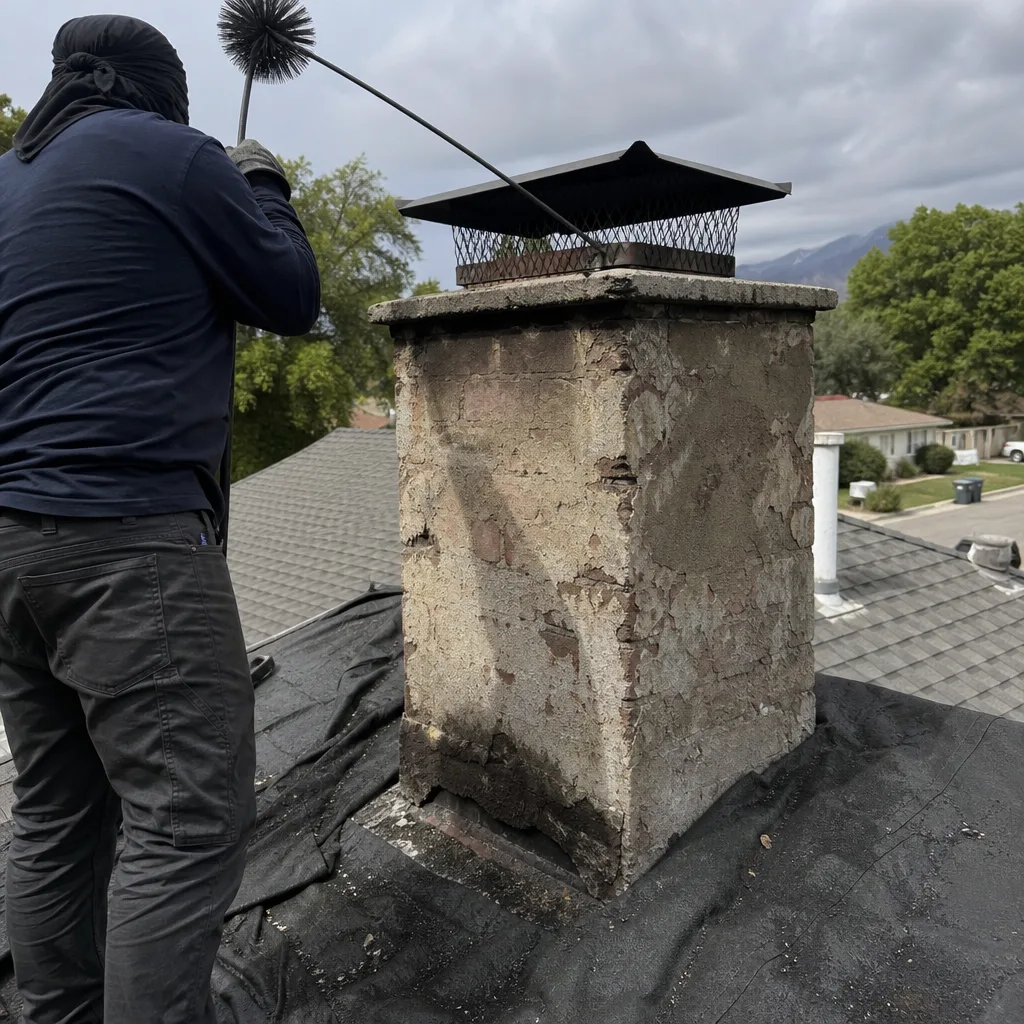 Before
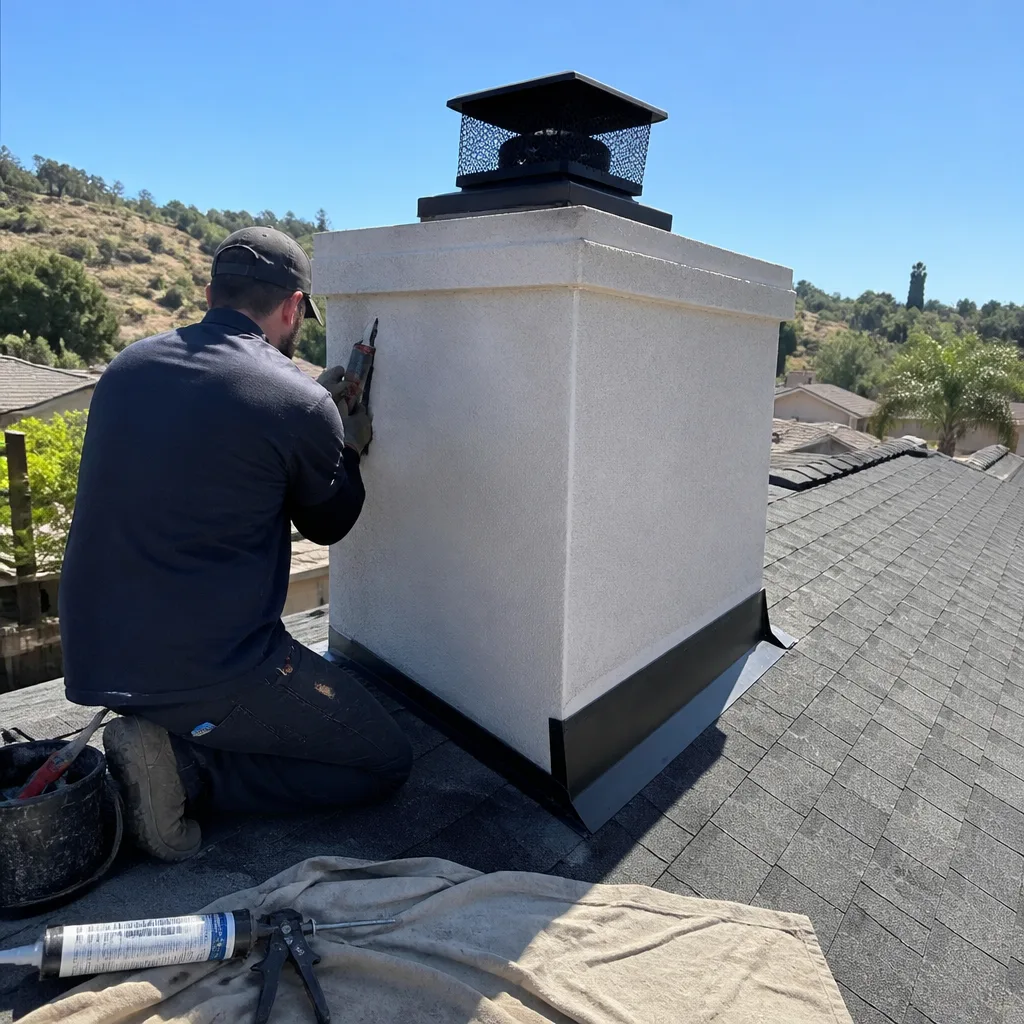 After
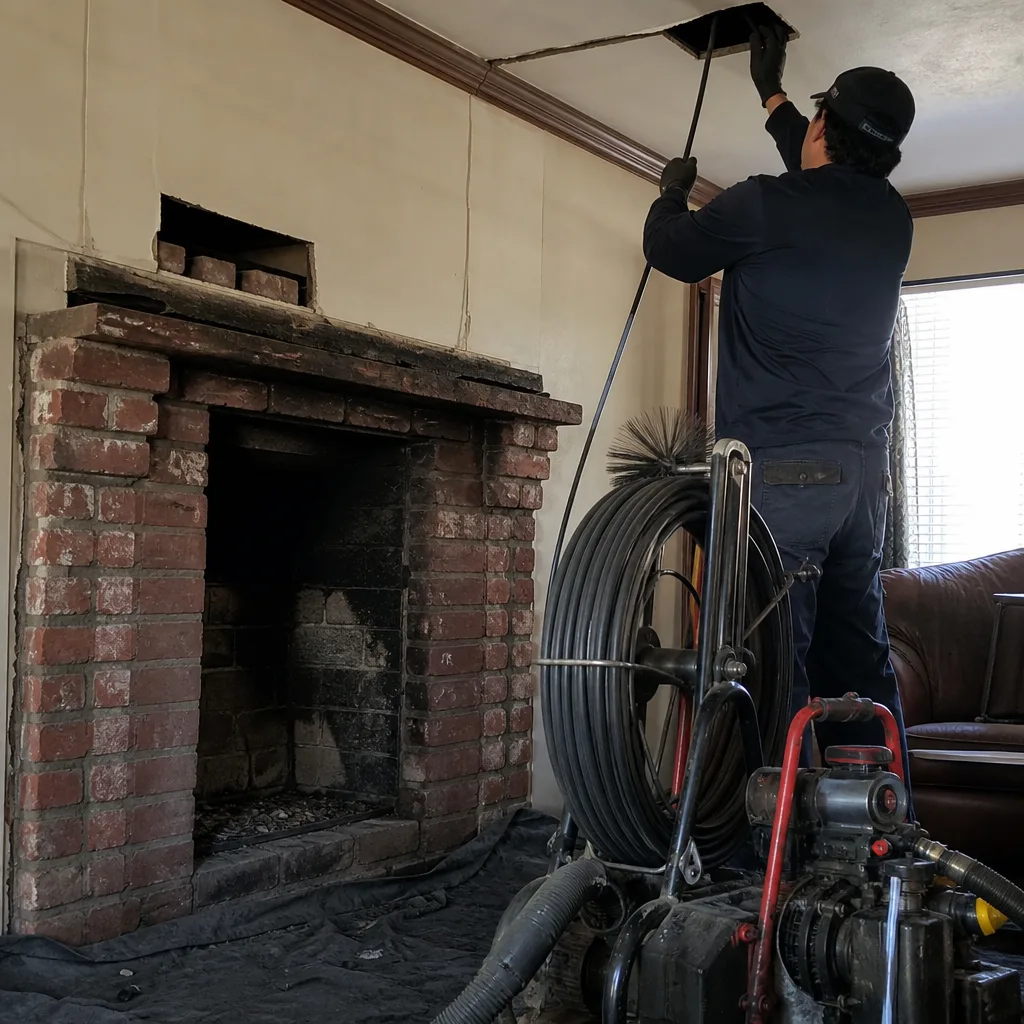 Before
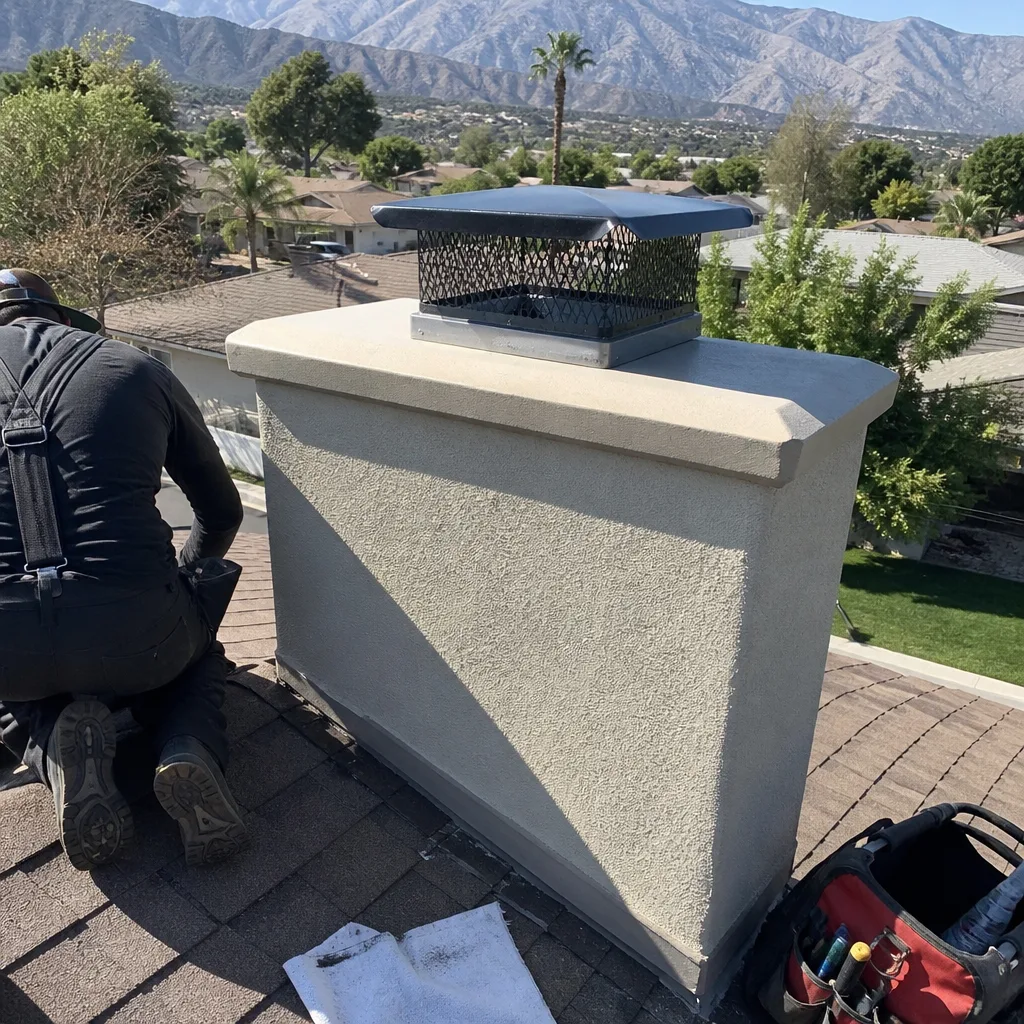 After
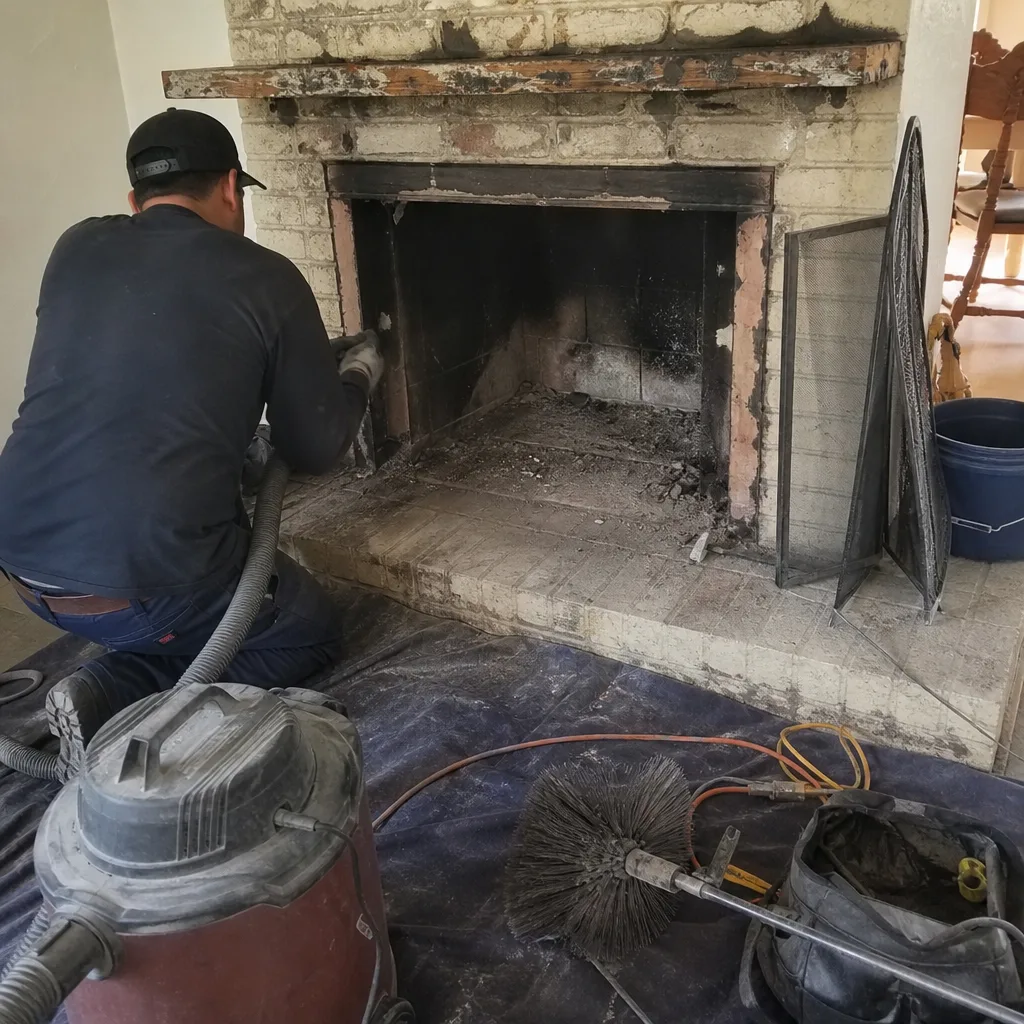 Before
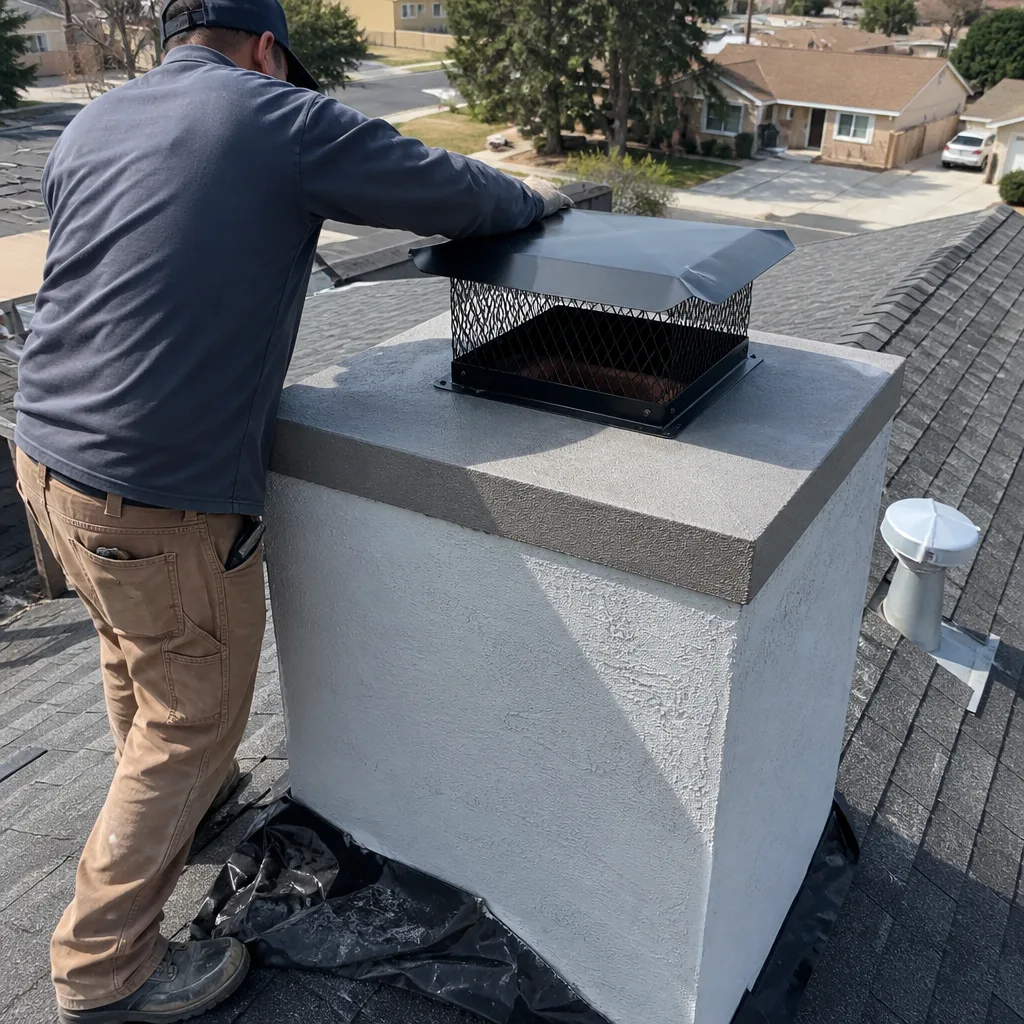 After
When to Call a Professional
There are specific moments where calling a chimney specialist is the only smart move. If your chimney has not been inspected in two years or more and you burn wood regularly, schedule a camera inspection now. If you notice a strong smoke smell in the house when the fireplace is not in use, or if you see white staining or cracked masonry on the exterior chimney surface, do not wait. Those are signs of liner or crown failure. If you hear animals in the flue or find debris falling into the firebox, the cap has failed and needs replacement. And if your dryer vent has not been cleaned in over a year and the dryer takes two cycles to dry a load, the vent run is restricted. San Bernardino Chimney Sweep offers free estimates in San Bernardino. Call (877) 516-7159 to book a camera inspection or discuss what you are seeing.
Frequently Asked Questions
Ask for HeatShield for flue resurfacing, Gelco or Olympia Chimney for caps and crowns, and DuraFlex for full relining projects. These are contractor-grade lines that professional chimney supply houses carry, and they signal that the sweep has access to better materials than hardware store generics.
HeatShield is not always a substitute for full replacement, but it is a legitimate resurfacing option for many cracked flue tile situations. HeatShield extends liner life without demolition, works out cheaper than replacement, and gets the flue back to gas-tight condition faster. If the existing liner has collapsed or separated completely, a full reline is the right call.
Ask them to name the brands they use for liner repair, cap installation, and crown sealing, then ask them to put those names on the written estimate. A specialist will do it without hesitation. Reluctance to specify brands in writing is a red flag that material substitution may happen after you commit.
A CSIA certification tells you the technician has passed a test on chimney codes, clearances, and inspection standards. It does not tell you what materials they use. Use certification as a baseline for training, and use the material spec question as a separate check on quality.
The National Fire Protection Association recommends a sweep whenever creosote buildup reaches 1/8 inch, which for most seasonal San Bernardino burners means at least once per burn season. If you burn weekly or use softwoods, you may need a mid-season sweep. When we sweep, the camera inspection tells us whether the flue needs more than cleaning.
Yes, especially in San Bernardino. Caps take direct wind loading from the Cajon Pass gap flows and repeated heat cycling from the flue below. Cheap stamped-metal caps fail at the weld seams within a few seasons. A heavier gauge cap from Gelco or Olympia Chimney holds up to the conditions and protects the flue from rain and animals for years longer.
The Bottom Line
The brand inside your chimney matters more than the logo on the truck. San Bernardino homeowners who burn wood seasonally face wind, heat, and creosote conditions that punish cheap materials quickly. Asking for HeatShield, Gelco, Olympia Chimney, or similar contractor-grade lines by name on a written estimate does two things: it filters out contractors who cut material costs, and it documents what you paid for. Certifications tell you a technician knows the codes. Material specs tell you what they think about longevity. Demand both. And when the inspection finds damage, hire the specialist who can fix it in the same visit, not the sweep who hands you a report and a referral. We find it and we fix it. For more guides & resources on protecting your chimney system, visit our blog.
Written by the team at San Bernardino Chimney Sweep, serving San Bernardino since 2018.