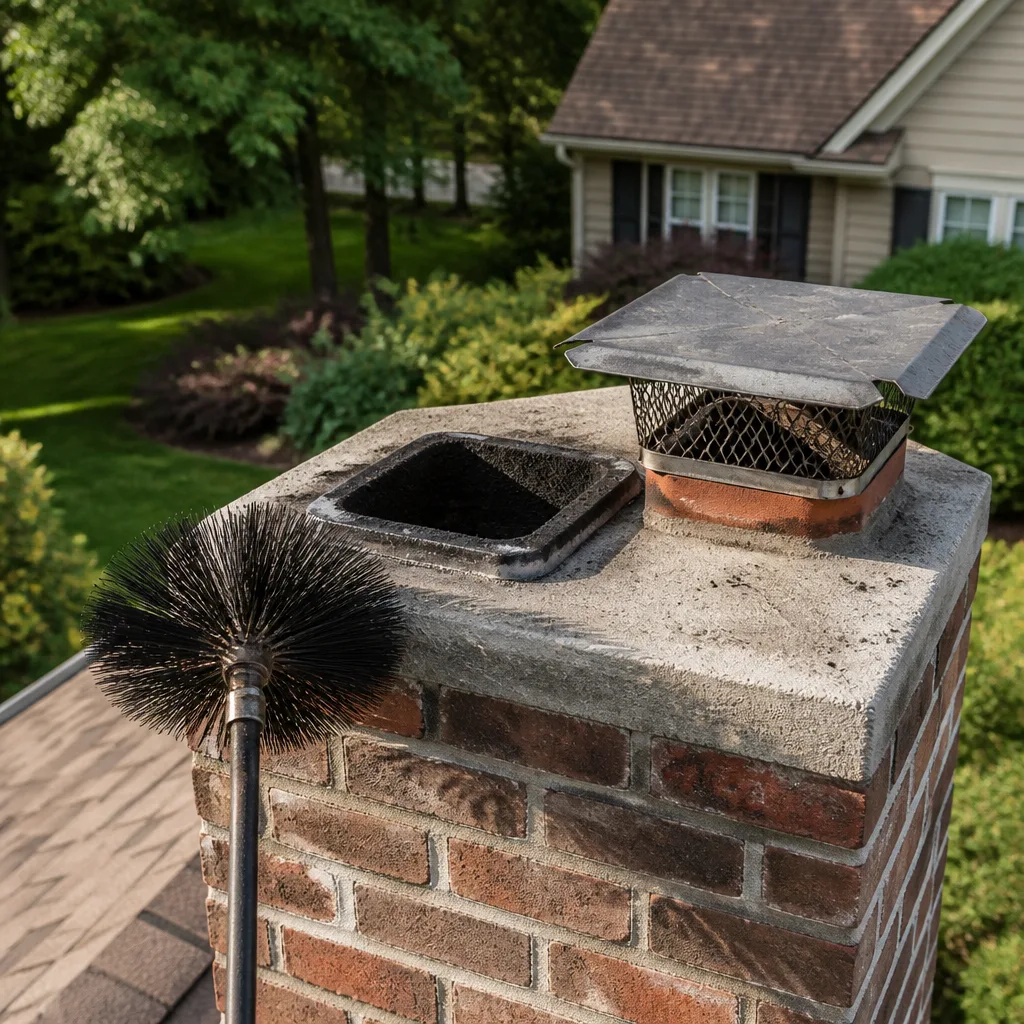
 Sweep & inspection
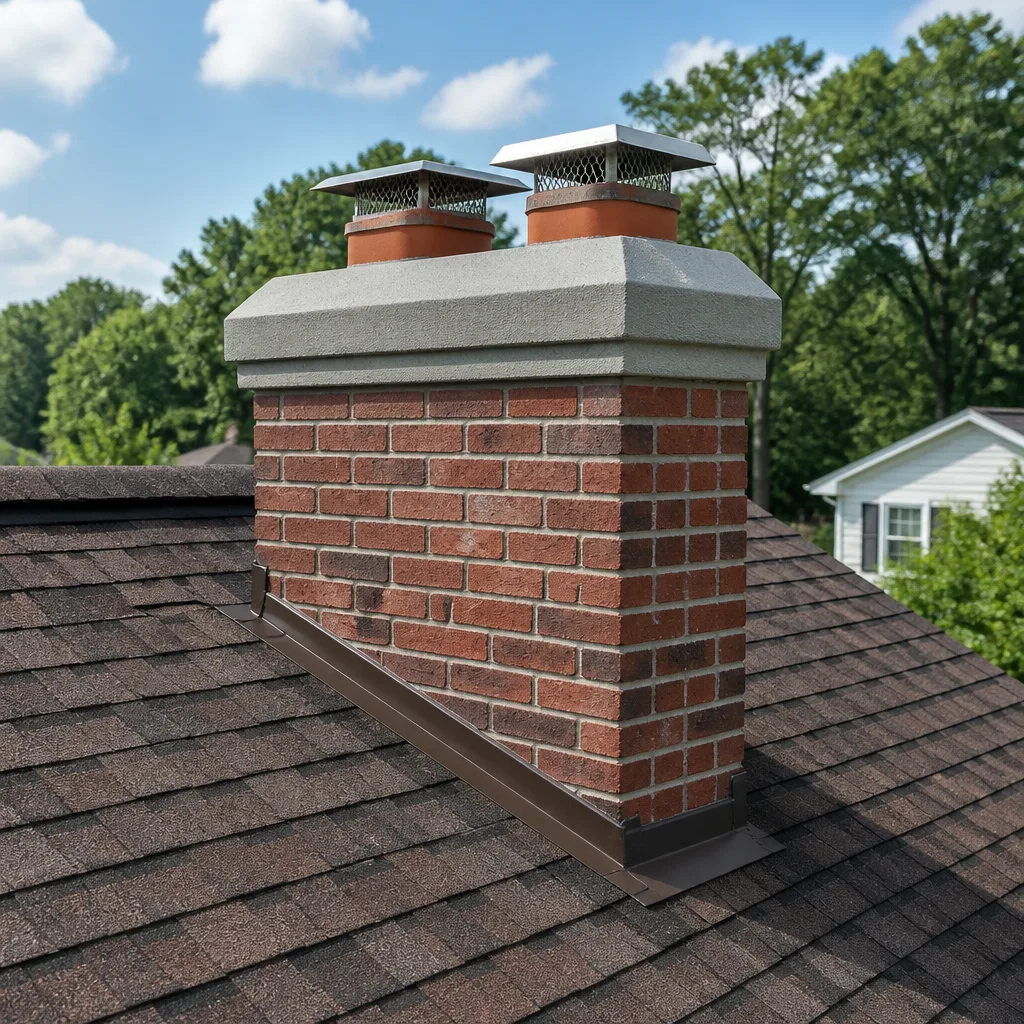 Caps & crowns
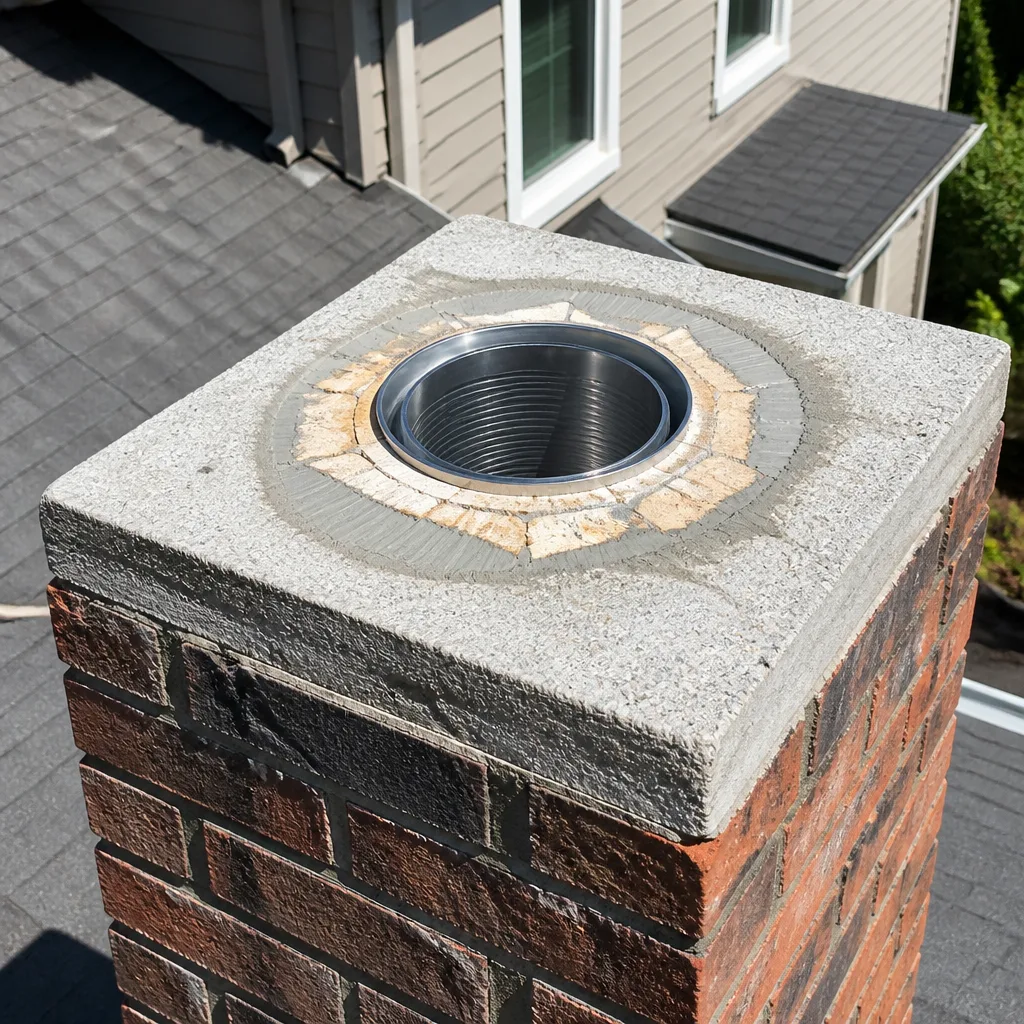 Flue relining
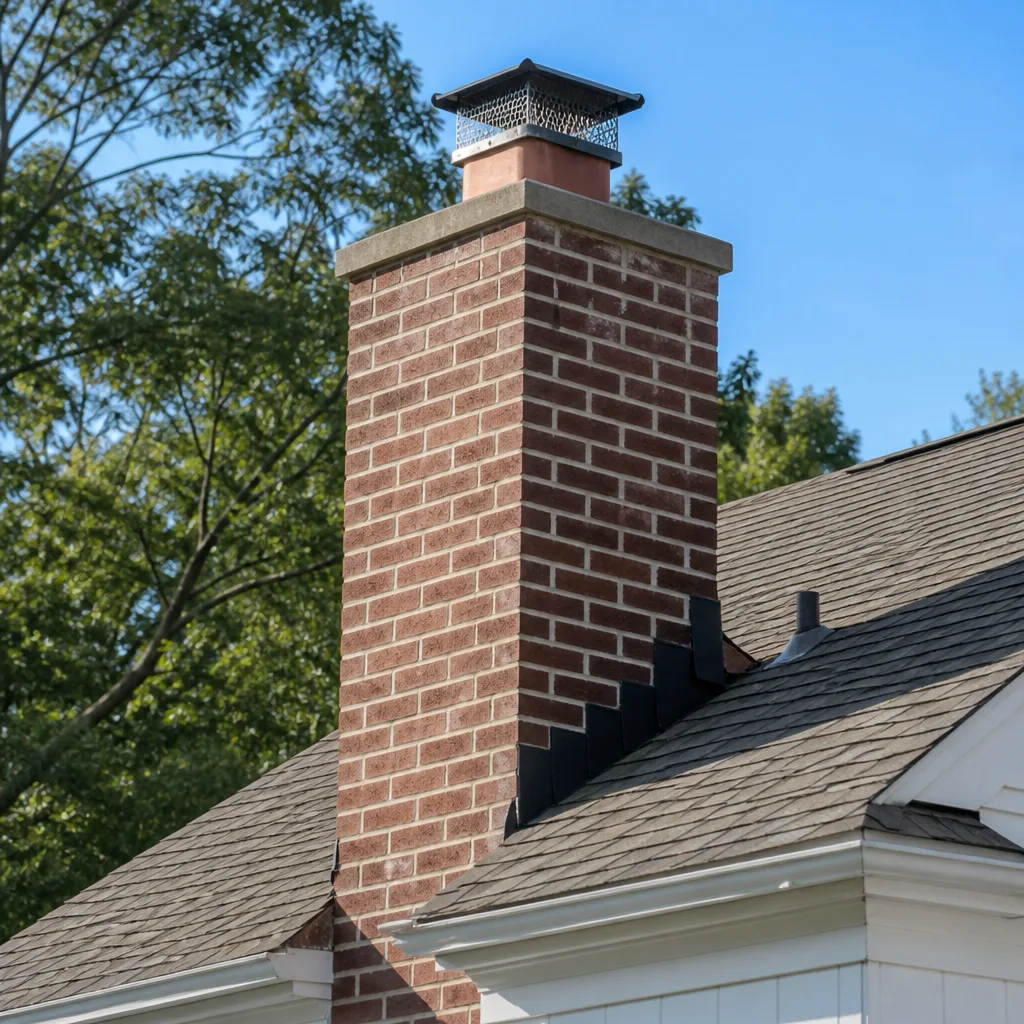 Masonry repair
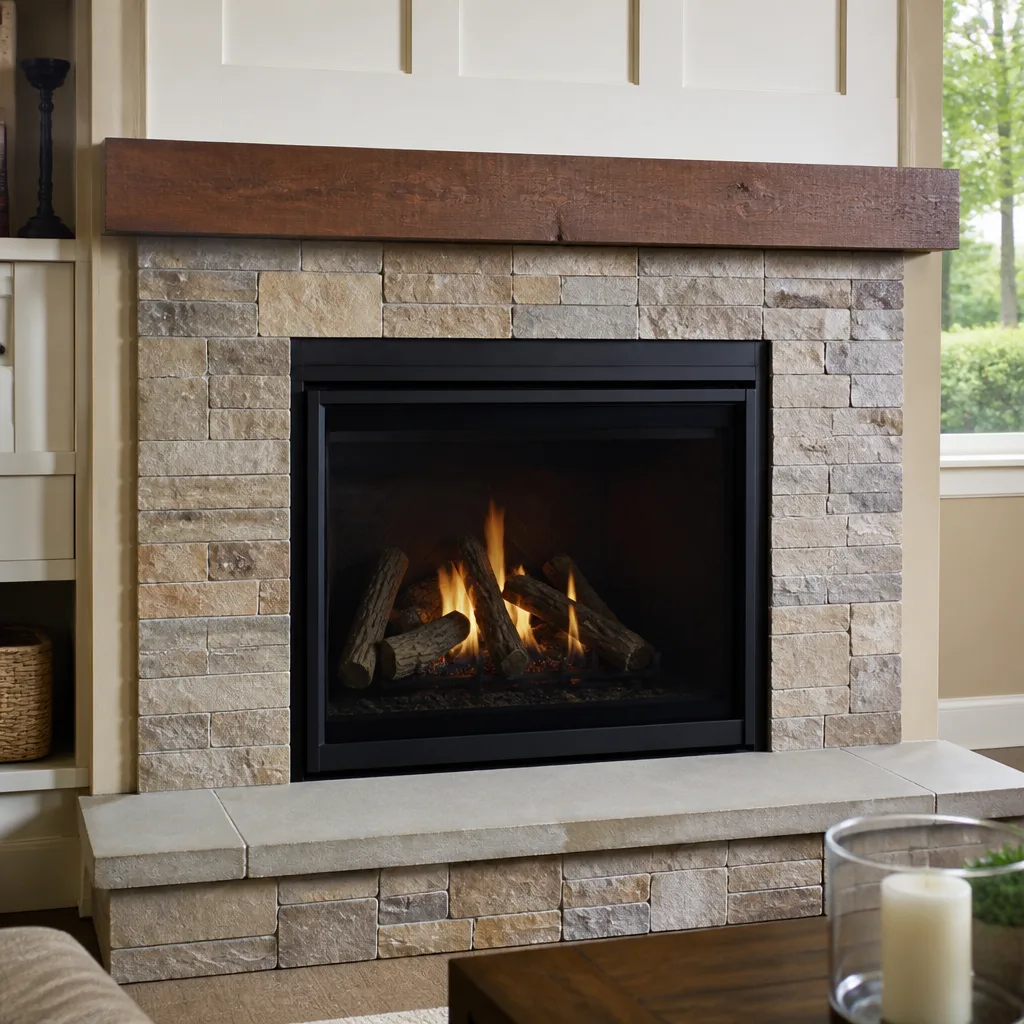 Gas fireplace service
Level 1 sweep and inspection to the NFPA 211 annual standard - flue, crown, cap, and flashing checked and photographed
Chimney sweep logs do not sweep chimneys. They loosen some creosote - which then falls where a brush and vacuum still have to collect it.
Fast, Reliable Chimney Sweep Across Upland
A chimney sweep in Upland typically runs $169 to $289 for a standard cleaning with a Level 1 inspection, and most jobs are completed the same morning or afternoon we arrive. Homes in the 91784, 91785, and 91786 zip codes sit right in our regular service rotation, so scheduling is straightforward and we know the housing stock well. If you need an honest look at your fireplace before burning season, call (877) 516-7159 and we’ll give you a straight answer on what your chimney actually needs.
Upland’s fireplaces sit idle for months in the heat, then get hammered during short cold snaps when the Santa Anas drop temperatures fast. That pattern creates a specific creosote problem we’ll explain below, and it’s the reason a sweep here isn’t just routine maintenance. It’s the difference between a fireplace that vents cleanly and one that glazes over and becomes a chimney fire waiting to happen.
Why San Bernardino Chimney Sweep Is Upland’s Preferred Chimney Sweep Company
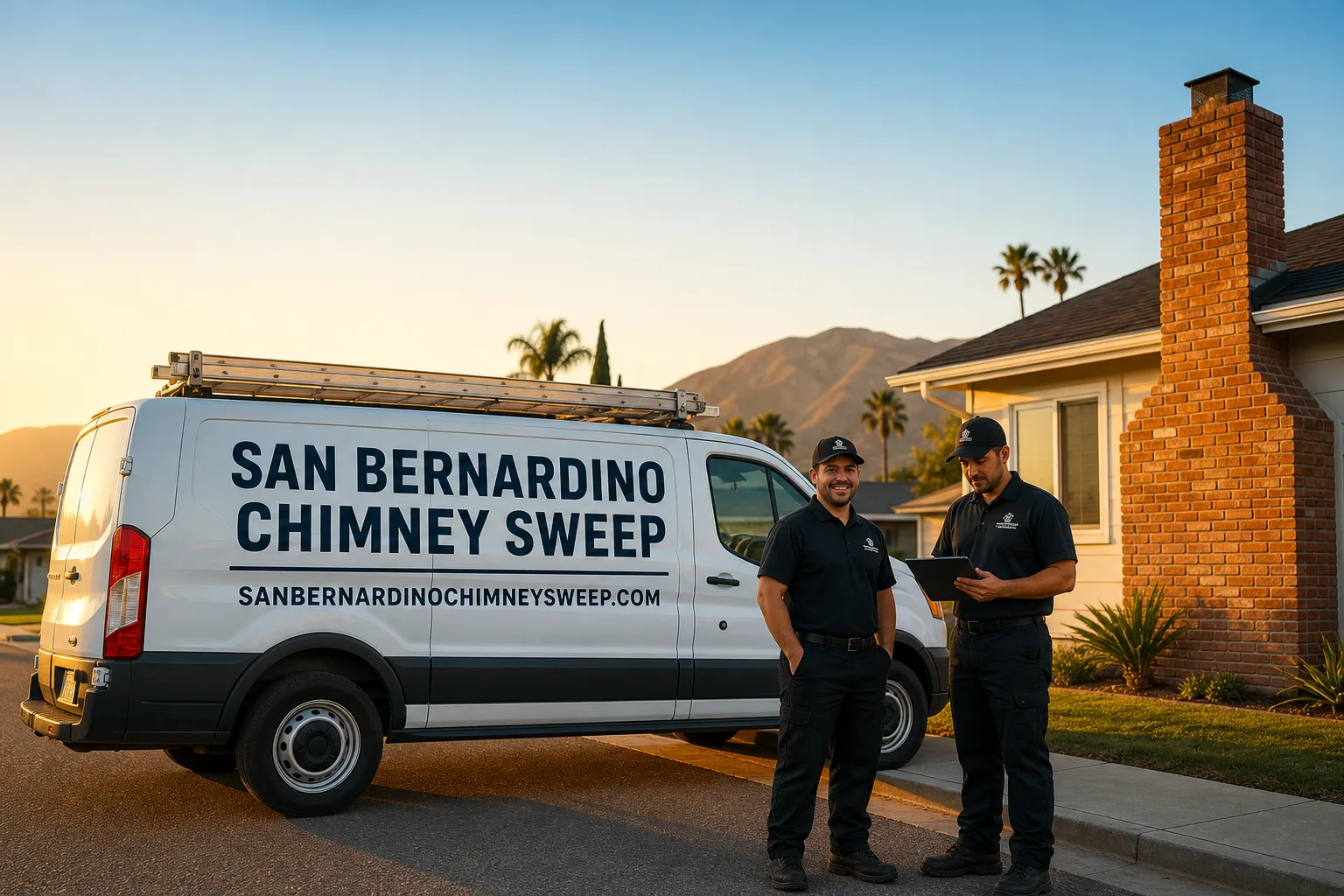
We’re a specialist, not a generalist. That distinction matters in Upland because the housing here spans early-1900s craftsman homes near the historic downtown core, postwar ranch tracts across the central grid, and 1980s-to-2000s stucco subdivisions to the north and east. Each era has its own chimney construction methods, liner types, and failure patterns. A handyman with a brush can’t tell the difference between a spalled clay-tile liner and one that’s still sound. We can, because chimney and ventilation systems are all we work on.
Most of our Upland customers find us through referrals from neighbors, which is how you’d expect a trade to work in a city where many of the homes were built during the postwar citrus-to-suburb transition and have changed hands through two or three generations. When Allen Prescott, our owner, walks a Upland property, he’s looking at things a general inspector misses: off-plumb masonry from decades of seismic settling, shared chimney stacks in attached units along the Euclid Avenue corridor, and cracked crowns that let water in and creosote glaze form unnoticed. That’s the local knowledge that keeps a small fireplace problem from becoming a $6,000 liner replacement.
We work with a curated lineup of contractor-grade materials: Copperfield, DuraFlex, HeatShield, and Gelco. You won’t find these on a hardware store shelf, and that’s the point. When we repair what we find during a sweep, we’re installing the same product lines professional chimney contractors use, not whatever was cheapest at the supply house that week.
Styles & brands we work with
Chimney Cleaning in Upland
Chimney cleaning in Upland means removing the creosote and soot that accumulate in concentrated layers because of how this city’s fireplaces get used. Upland’s hot, dry inland climate keeps fireplaces dormant for eight or nine months, then a Santa Ana cold snap hits and you’re burning every night for three weeks. That stop-start cycle produces dense, hard creosote deposits that a quick brush-and-go won’t fully remove. A standard chimney cleaning in Upland runs $169 to $229 for a single-story home with an accessible roof and a masonry fireplace in typical condition. Two-story homes, steep pitches, and heavily glazed first-degree or second-degree creosote push toward $249 to $289 because of the extra tooling and time.
Creosote Removal Done Properly
Creosote isn’t one substance. It forms in stages, from a flaky soot that brushes away to a hard, shiny glaze that requires rotary cleaning tools and chemical treatment. In Upland’s climate, we see a lot of second-degree creosote that looks like tar-coated cornflakes on the flue wall. Left alone through another season, it becomes third-degree glaze, and that’s the stage where chimney fires start. We remove it correctly the first time and we tell you what stage you’re at, with photos, so you know what you’re paying for.
What We Check During the Sweep
Every cleaning includes a visual check of the flue liner, smoke chamber, damper, and chimney cap. We’re looking for cracked clay tiles, gaps in mortar joints, animal entry points, and caps that have rusted through. In Upland, where dry rot and seismic settling have shifted many older masonry chimneys off-plumb, we pay particular attention to cracked crowns and separated flue tiles. Those are the defects that turn a $200 cleaning into a $4,000 repair if they go undetected, and we’d rather find them early.
Fireplace Cleaning in Upland
Fireplace cleaning in Upland is more than sweeping the flue. The firebox itself collects ash, soot, and unburnt wood fragments that hold moisture against the masonry and speed up spalling. In Upland’s older homes, particularly the 1950s and 60s ranch houses with original masonry fireplaces, firebrick that hasn’t been cleaned properly starts to crumble at the mortar lines. A full fireplace cleaning, including the firebox, smoke shelf, and damper assembly, runs $189 to $259 depending on how much buildup has accumulated in the firebox and whether the damper needs rust removal or lubrication.
Firebox and Hearth Care
The firebox is where the heat lives, and it takes the worst abuse. We remove the ash, vacuum the smoke shelf, and check the firebrick for cracks and gaps that let heat reach the surrounding combustibles. In Upland homes with decorative fireplaces that get used only a few times a year, the firebox often looks fine but hides a rusted damper or a warped lintel bar. We catch those before they fail.
Why Annual Sweeps Matter Here More Than the Coast
A fireplace in a beach city with nightly coastal fog and year-round use builds creosote slowly and evenly. A fireplace in Upland builds it in sudden, dense layers during cold snaps. That concentrated creosote is what glazes, and glaze is what ignites. The National Fire Protection Association standard is a sweep once per year or whenever buildup reaches 1/8 inch, but in Upland’s climate we see plenty of homes that need it after a single heavy burning season. It’s the honest reality of this specific inland climate, and it’s why annual service here isn’t overkill.
Trusted Brands We Service in Upland
We stock and install Copperfield caps and dampers, HeatShield resurfacing material, DuraFlex flexible liner systems, and Gelco chimney covers for Upland homes. That means when an inspection turns up a cracked liner or a deteriorated cap, we can usually handle the repair on the spot instead of scheduling a second visit. For Upland’s older masonry fireplaces with damaged clay-tile liners, HeatShield is a specific advantage: it resurfaces the existing flue from the inside, restoring function without the cost and demolition of a full liner replacement. It’s contractor-grade material, applied by a specialist who’s trained to use it, and it’s the difference between finding a problem and fixing it.
See the difference
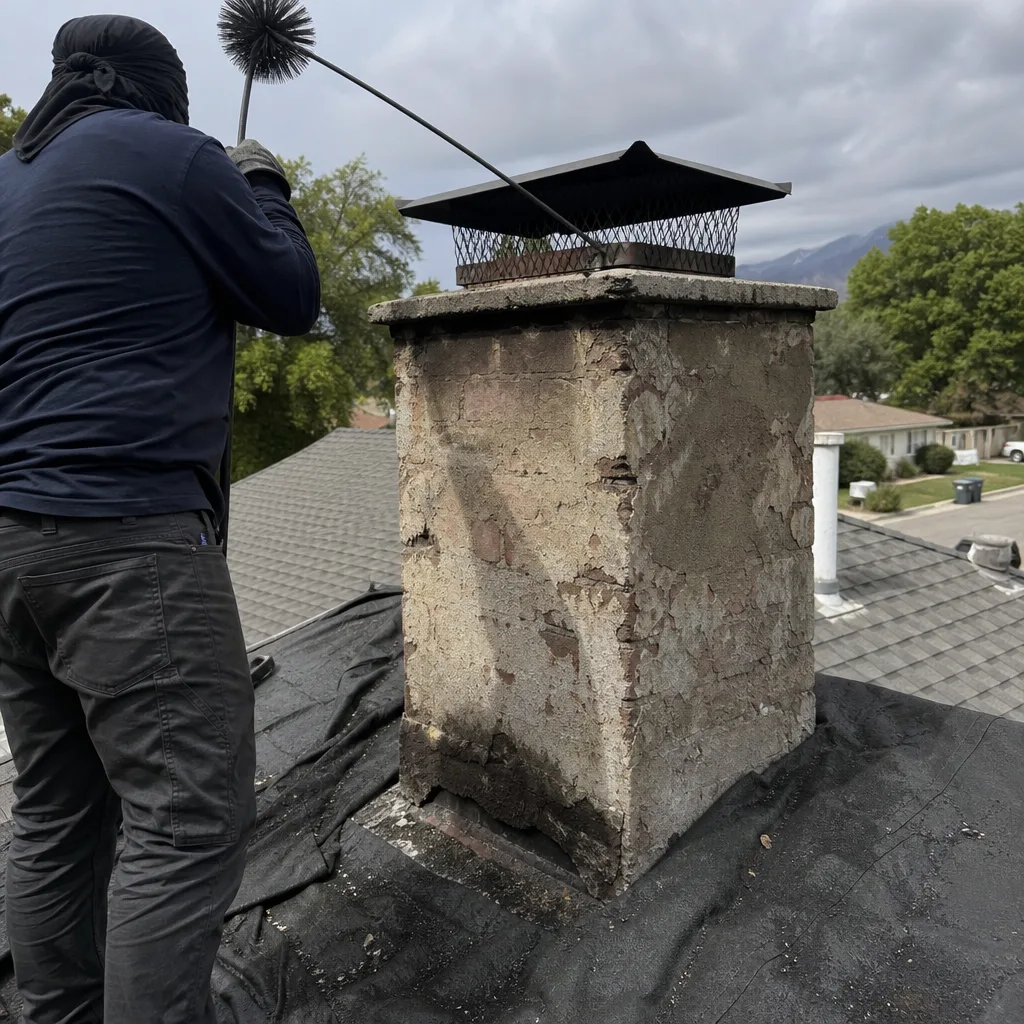 Before
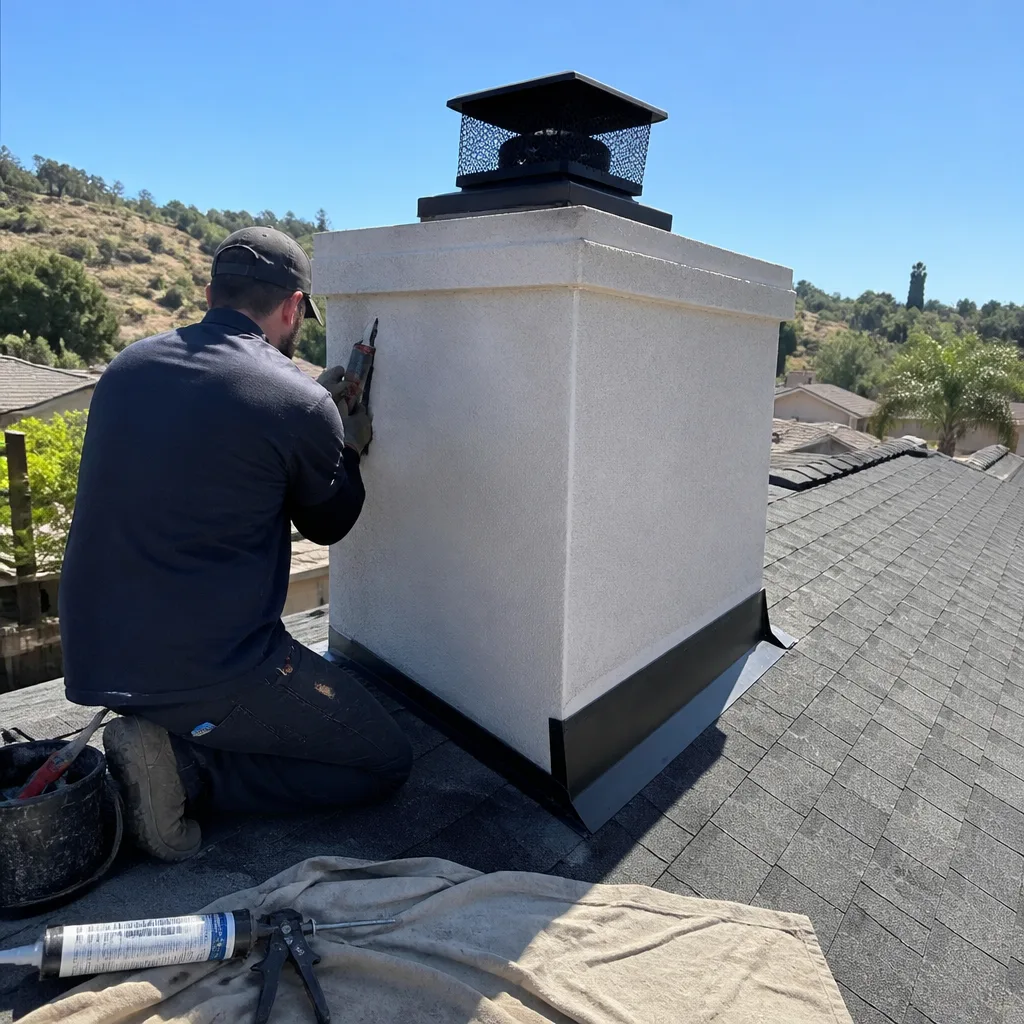 After
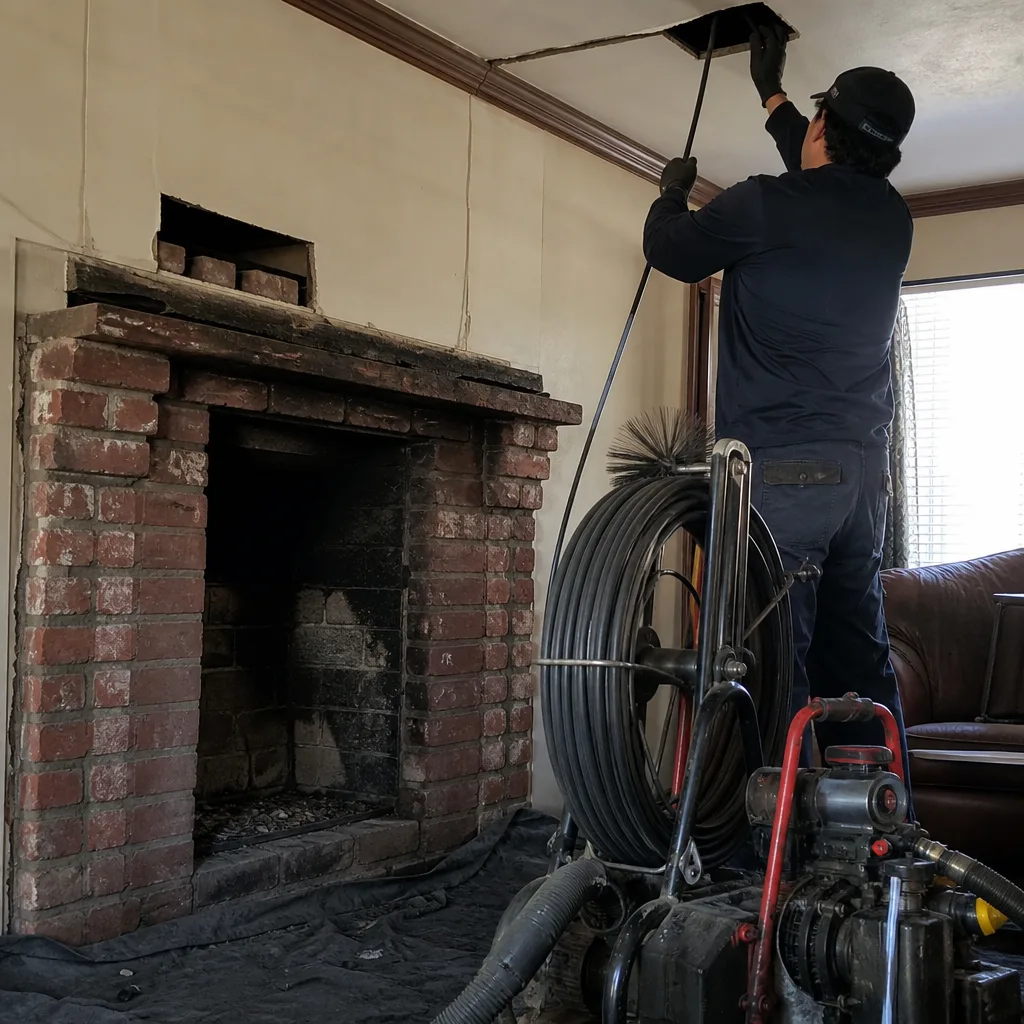 Before
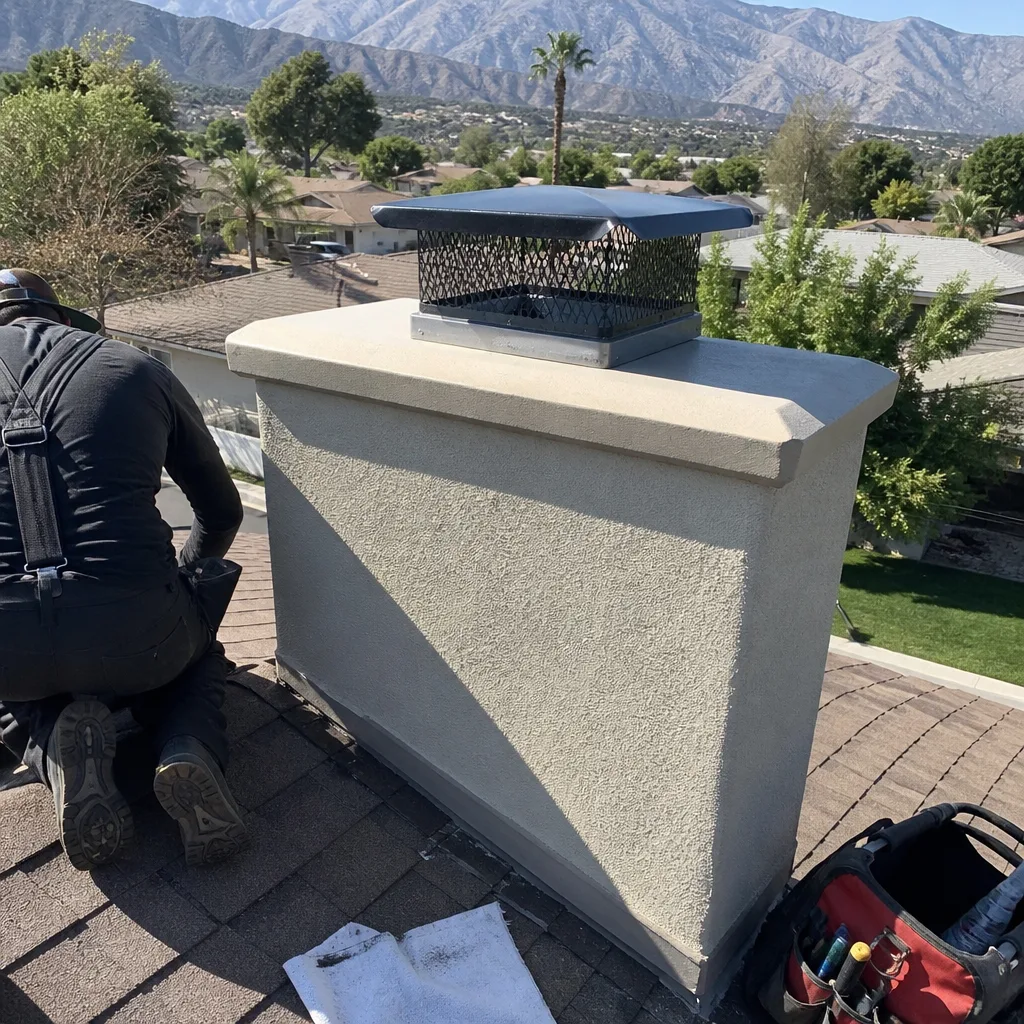 After
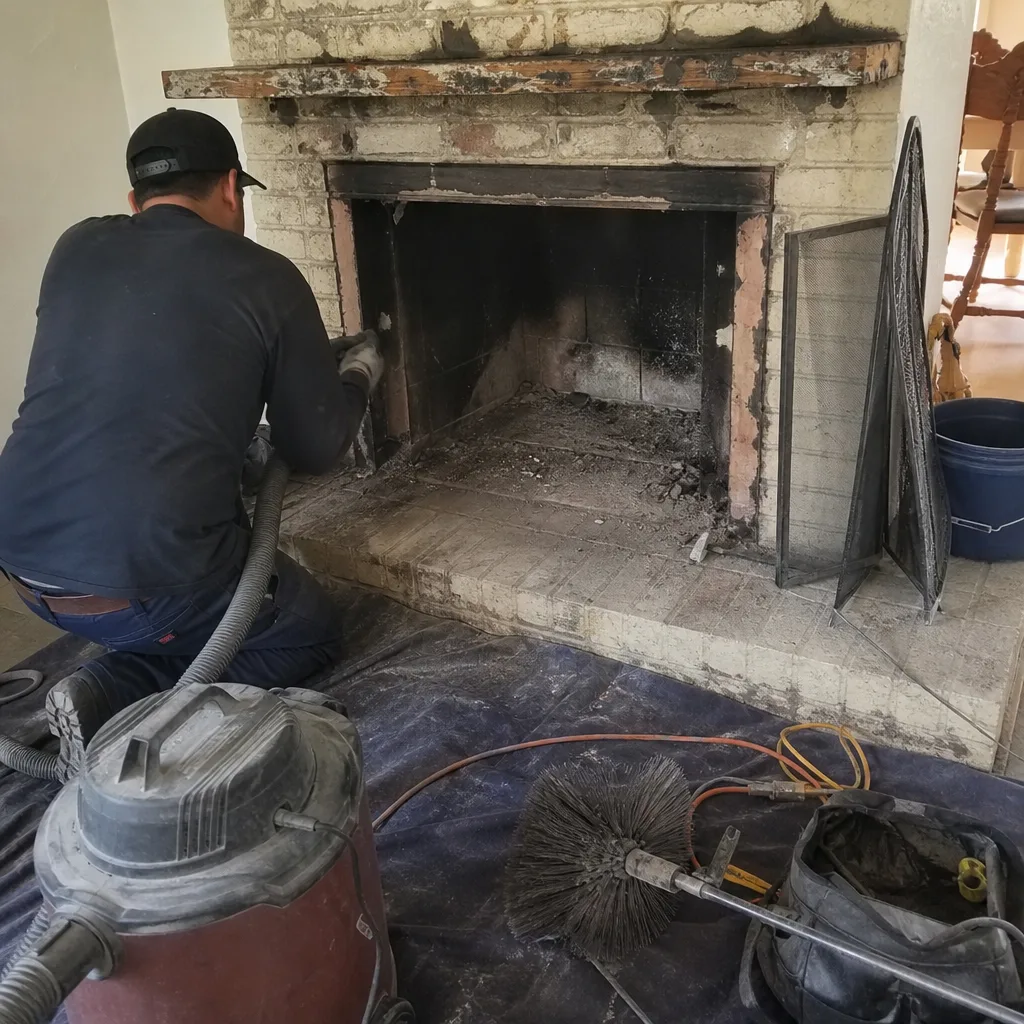 Before
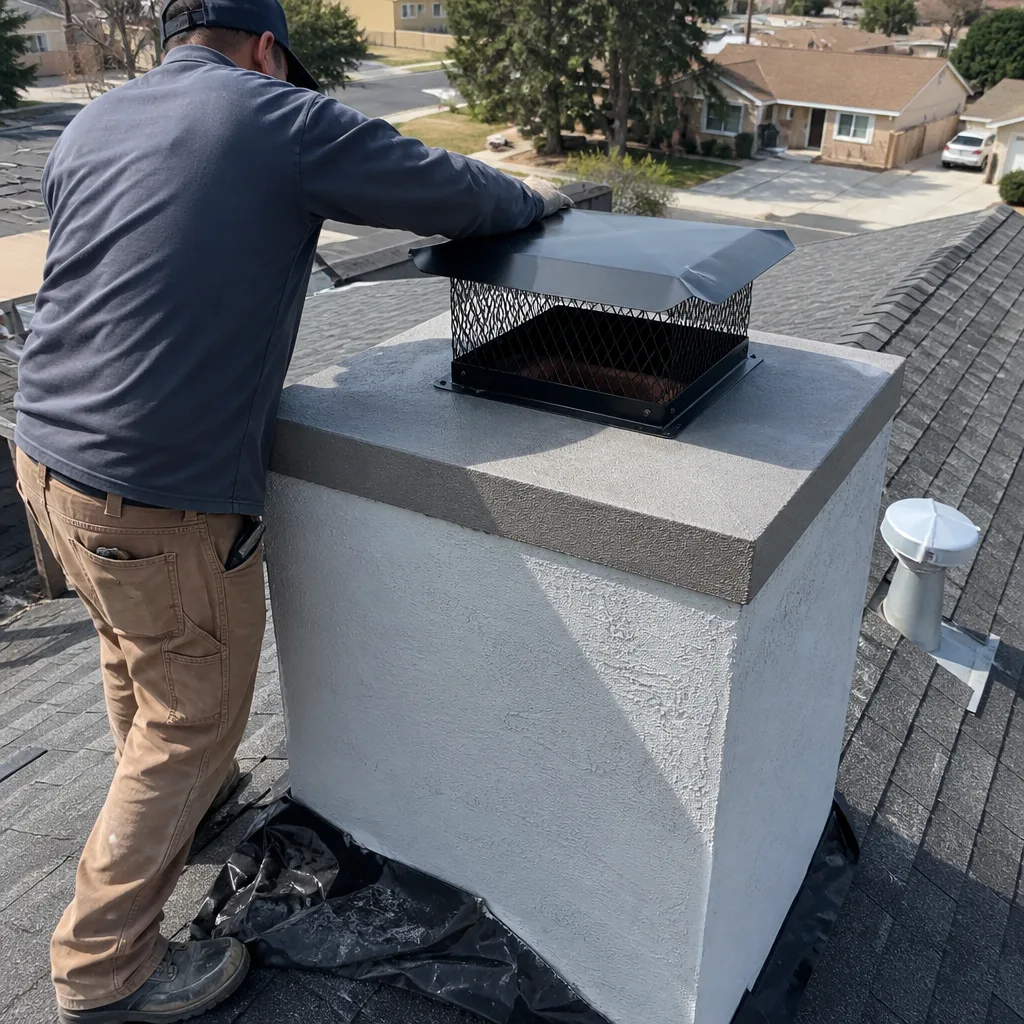 After
Common Chimney Sweep Problems We See in Upland Homes
- Shared-stack cross-contamination in attached housing: Along the Euclid Avenue corridor and in older attached units near downtown, many chimneys share a single masonry stack with a neighbor’s flue. If a neighbor’s water heater or furnace vents into the same stack and the flue liners have separated, combustion gases can cross into your fireplace flue. A standard sweep that only looks at one side misses it. We check both sides.
- Glazed creosote in low-use fireplaces: Upland’s long idle periods followed by sudden heavy use create exactly the conditions for third-degree creosote. Homeowners in the newer north-side subdivisions often assume a decorative fireplace doesn’t need service because it’s barely used. It does, and the glaze forms anyway.
- Off-plumb masonry and cracked crowns on foothill-adjacent homes: Decades of seismic settling and dry rot have shifted many older Upland chimneys. A chimney that’s half an inch off-plumb opens hairline cracks in the flue liner and crown. Water gets in, creosote bonds to the roughened surface, and the defect compounds. Coastal cities don’t see this pattern. Upland does.
- Neglected factory-built flues in 1980s-2000s subdivisions: The stucco homes north and east of the central grid mostly have metal factory-built chimneys. Owners assume no wood means no service. What we find is bird and squirrel nests in the flue, corroded metal liners, and caps that have detached. A metal flue needs a different sweep tooling and a trained eye, and it needs it annually.
Pricing for Chimney Sweep in Upland, CA
A standard chimney sweep with Level 1 inspection in Upland runs $169 to $289. The lower end covers a single-story home with an accessible roof, a straightforward masonry flue, and normal creosote buildup. The upper end accounts for two-story access, steep roof pitches common in the northern foothill sections, heavy glazed creosote requiring rotary tools, or a firebox that needs deep cleaning. Fireplace-only cleaning without the flue runs $189 to $259. A Level 2 inspection, which we recommend for any home changing hands or after a chimney fire, adds $150 to $250 depending on the home’s size and the number of flues. We don’t quote over the phone and then change the number at your door. The price we agree on is the price you pay, and the estimate is free. Call (877) 516-7159 and Allen will walk through what your specific Upland home needs.
We Also Serve Cities Near Upland
Our Chimney Sweep team regularly works in San Antonio Heights, Claremont, Montclair, and Rancho Cucamonga. If you’re just over the Upland line in any direction, we’re already familiar with your neighborhood’s housing stock and chimney types. For more detail on our full service area, see our Upland page or the main Chimney Sweep service hub.
Serving Upland, CA — Our Local Coverage Area
We’re based in the Upland area and know this community well. Use the map below to see our service coverage — if you’re nearby, we can almost certainly help.
FAQs About Chimney Sweep in Upland
Yes, and in Upland it’s one of the most important things we do. On an attached home with a shared masonry stack, we check both flues from the roof and note whether any cross-contamination risk exists. On a tight street near historic downtown Upland, our tech found a 1950s masonry fireplace with a cracked clay-tile flue liner and a neighbor’s water heater venting into the same stack. We used a HeatShield liner to reline the flue and installed a new chimney cap to stop cross-contamination, then performed a Level 2 inspection to confirm the fix. That’s the difference between a sweep and a specialist’s sweep. Call (877) 516-7159 if you suspect your shared stack has issues.
Yes. Even a few artificial-log burns per year deposit creosote and, more critically, the months of idle time let birds, squirrels, and wasps move in. We find animal nests in Upland flues all the time, in homes where the owner says they barely use the fireplace. A Duraflame log burns cleaner than cordwood, but it still produces combustion byproducts, and it still can’t compensate for a chimney cap that’s failed or a flue that’s taken on water. Annual service is cheap insurance against a chimney fire or carbon monoxide backup, and it’s the standard we recommend for every Upland home with a fireplace, regardless of fuel type. Call (877) 516-7159 to schedule your annual sweep.
First-degree creosote is a light, dusty soot that brushes off with a standard sweep. Third-degree creosote is a hard, shiny glaze that bonds to the flue wall and fuels hot, fast chimney fires. Upland’s climate drives this progression faster than coastal areas because fireplaces sit idle through long dry months and then get heavy use during Santa Ana cold snaps. The creosote builds in concentrated layers under high heat, which is exactly what pushes it from first toward third degree. This is why annual sweeps in Upland matter more than in a city where fireplaces are used steadily. Call (877) 516-7159 and we’ll tell you what stage you’re at, with photos, and what it costs to remove.
Yes. Factory-built metal flues require different brushes and a different inspection approach than masonry chimneys, and we work on them constantly in the newer Upland subdivisions north of the 210 and around the foothills. The common failure on these systems is a corroded inner liner or a detached cap, both of which we identify and replace. Even if you never burn wood, the flue still needs an annual check for animal entry, rust-through, and joint separation, and we handle all of it. Call (877) 516-7159 to schedule a sweep with someone who actually works on metal flues regularly.
Upland sits near the San Gabriel Mountains and on a seismically active region, and older masonry chimneys here show it. Decades of minor settling shift chimneys off-plumb and crack the clay-tile liners and the crown. Those cracks let water in, which erodes mortar and creates a surface where creosote bonds aggressively. A chimney that’s shifted a half inch may still look fine from the ground, but it’s a carbon monoxide risk and a fire risk. We check for off-plumb conditions and liner gaps on every Upland sweep, and when we find them, we have the repair capability to fix it, not just report it. Call (877) 516-7159 for a free estimate and an honest assessment of your chimney’s condition.
If you’re ready to get your fireplace or chimney swept before the cold snaps hit, call us at (877) 516-7159. We’ll give you a flat price before we book, show you photos of everything we find, and fix what needs fixing with contractor-grade materials, not hardware-store substitutes.
Written by Allen Prescott, Owner at San Bernardino Chimney Sweep, serving Upland and the surrounding foothill communities.